
Published on - Jan 13th, 2026
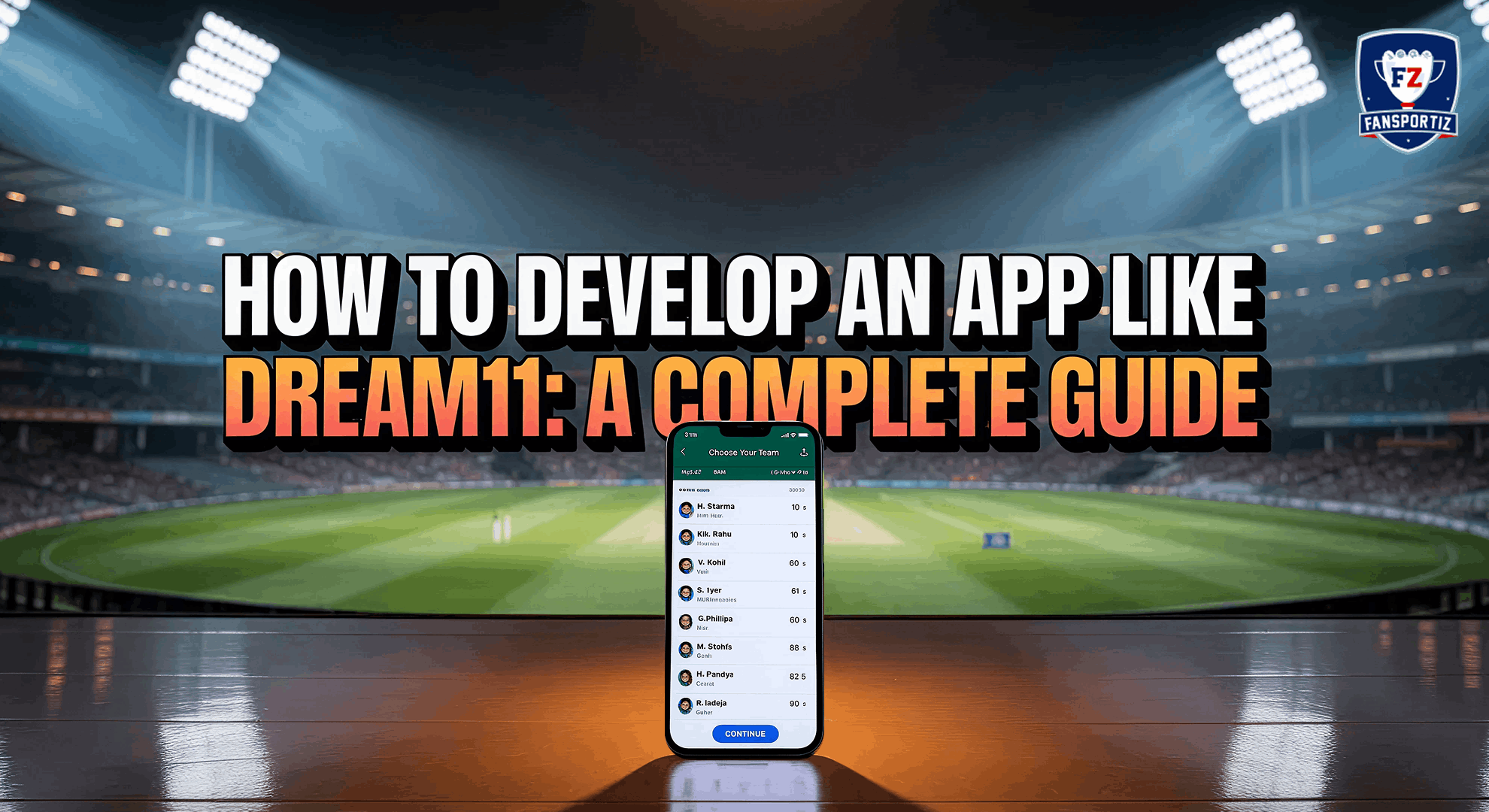
Building a successful fantasy sports application like Dream11 involves several key stages. This in-depth guide on how to develop app like dream11 in 2026 covers everything from understanding the market to launching and maintaining your app.
What You’ll Need Before You Start
Before diving into development, understand the basics first:
- Market Research: Understand who you’re building for, what the competition is doing, and where the opportunities lie.
- A Solid Business Plan: Figure out how you’ll make money and how you plan to grow.
- Your Budget: Make sure you’ve allocated funds for development, marketing, legal fees, and keeping the app running smoothly.
The Step-by-Step Process to develop platform like Dream 11
Here’s a breakdown of how to develop your fantasy sports app:
1. Laying the Groundwork: Concept and Planning
- Market Research: Deep Dive & Dig into the fantasy sports industry. Identify the most promising user segments and understand what makes players stick. The market is growing, and users want more control and a realistic gaming feel.
- Define Your Business Model: How will your app work? Most successful apps focus on skill-based gameplay where users pick virtual teams, and points are awarded based on real athlete performance in live games.
- Determine Your Scope: What sports will you include in your platform? This decision affects everything from your development team’s size to your fundraising needs and technical setup.
2. Designing for Engagement: Wireframing and UI/UX
- Grab Attention Quickly: Aim for an experience that hooks users within the first five seconds.
- Keep it Simple and Smooth: Design navigation that’s easy to follow and an interface that users find straightforward.
- Present Information Clearly: Use a minimalist design and structure content logically, like an inverted pyramid, so the most important info is front and center.
- Showcase Data Effectively: Make sure stats and performance metrics are easy to understand.
3. Building the Core: Feature Development
User Panel Essentials:
- Easy sign-up and login.
- A clear landing screen.
- Options to join contests.
- User profile management.
- A way to track earnings and transactions.
- A referral program (“Invite and Earn”).
- Access to help and support.
Admin Panel Essentials:
- Secure access for administrators.
- An operational dashboard.
- Tools for managing contests.
- Reporting and analytics features.
- Tools to manage user accounts and their earnings.
- A system for processing withdrawal requests.
- Prize management capabilities.
Nice-to-Have Features (Consider these later):
- Live score APIs.
- Integration with live streaming.
- Chatbot support.
- Blockchain for transactions.
- Real-time analytics.
- An e-commerce section for merchandise.
- Social sharing features.
- Leaderboards.
- Push notifications.
4. Setting Up the Tech Stack
- Frontend (What users see):
For native apps: Kotlin/Java for Android, Swift/Objective-C for iOS.
For cross-platform: React Native or Flutter.
Create a website for marketing and user acquisition. - Backend (The engine behind the scenes):
Languages like Node.js or Python work well. - Databases (Where your data lives):
Consider MySQL, PostgreSQL, or MongoDB. - Cloud Services (Hosting and infrastructure):
Amazon Web Services (AWS), Microsoft Azure, or Google Cloud are common choices.
Key Integrations:
- Third-party APIs for live sports data.
- Payment gateways (like Razorpay or Stripe) for transactions.
- Push notification services.
5. Development and Integration
- Build the App: Develop both the user-facing parts and the server-side logic.
- Connect the Pieces: Integrate external services for data, payments, and notifications.
- Plan for Growth: Design your system to handle high traffic, especially during big events, and to support future expansion.
6. Quality Assurance (QA)
- Test Everything: Rigorously test for bugs, performance issues, security vulnerabilities, and scalability.
- Fix Bugs: Address any problems found during testing.
7. Launching Your App
- Submit to App Stores: Prepare and submit your app to the Google Play Store and Apple App Store.
Go Live! Make your app available to users.
8. Keeping it Fresh: Support and Updates
- Ongoing Maintenance: Fix bugs as they arise and release regular updates.
- Add New Features: Introduce new functionalities based on user feedback and market trends to keep users engaged.
9. Staying Compliant
- Know the Rules: Research and follow all local laws and regulations related to fantasy sports.
- Get Licenses: Obtain any necessary licenses or certifications.
- Promote Responsible Gaming: Implement age restrictions and responsible gaming practices.
10. Making Money and Getting Noticed
Monetization Options:
- Contest entry fees.
- In-app purchases.
- Advertising.
- Subscriptions.
- Pay-per-game fees.
- Affiliate marketing.
- Brand partnerships.
- Selling merchandise.
- White-labeling your platform.
Promotion Strategies:
- Offer free trials or memberships.
- Provide attractive cash prizes.
- Run an affiliate program.
- Use digital marketing (SEO, social media, content, paid ads).
- Implement referral programs.
- Allow users to share achievements on social media.
Pro Tips, Examples, and Best Practices
- Follow The 5-Second Rule and make sure your app offers immediate value and a compelling experience.
- Focus on the user by designing intuitive navigation and clear information presentation.
- Build for scale and plan for growth and high traffic from the start.
- Diversify Revenue. Don’t just rely on just one way to make money.
- Market Smart. Use a mix of digital channels to reach potential users.
- Security First. Protect user data and transactions with strong security measures.
- Choose Partners Wisely. Collaborating with experienced app development firms can bring valuable expertise in areas like security and performance.
Common Pitfalls to Avoid
- Underestimating Costs: Budget realistically for development, maintenance, and marketing.
- Ignoring Scalability: A slow app during peak times will drive users away.
- Poor User Retention: Without engaging features, users won’t stick around.
- Security Lapses: Data breaches can destroy user trust.
- Lack of Uniqueness: If your app is just like everyone else’s, it’s hard to stand out.
- Unreliable Live Data: Inaccurate scores will frustrate users.
- Legal Oversights: Failing to comply with regulations can cause serious problems.
Troubleshooting Common Issues
- High Development Costs: Budget carefully, choose the right tech stack, and find cost-effective development partners.
- Scalability Problems? Design for scale from day one and use scalable cloud infrastructure.
- Low User Retention? Add engaging features, personalize experiences, offer varied contests, and update regularly.
- Security Worries? Implement strong security protocols, secure payment gateways, and data protection measures.
- Facing Competition? Differentiate with unique features, a better user experience, and a strong marketing push.
- Real-time Data Issues? Use efficient APIs and robust backend systems for accurate live scores.
- Data Complexity? Employ smart data management strategies and analytics tools.
- Balancing Performance and Features? Optimize for speed and responsiveness while offering a rich feature set.
Key Takeaways
- The fantasy sports market is growing, offering significant opportunities for engaging apps.
- Success hinges on user engagement, a well-defined feature set, and a clear scope.
- Your technical foundation frontend, backend, databases, and cloud infrastructure is vital for performance and scalability.
- The development process is a marathon, involving planning, design, building, testing, launching, and ongoing support.
- Multiple monetization strategies can ensure financial stability.
- A strong marketing plan is essential for attracting and retaining users.
- Adhering to legal and compliance requirements is non-negotiable.
- Be prepared for challenges like costs, scalability, security, and competition.
- Integrating AI and other digital services can give your app a competitive edge.
In Conclusion
Launching a fantasy sports app like Dream11 presents a powerful opportunity to enter a rapidly expanding digital sports market. By implementing a proven business model, delivering a seamless user experience, and ensuring robust security and legal compliance, you can build a profitable and scalable platform. Leveraging a ready-to-deploy Dream11 Clone significantly reduces development time and costs, while partnering with a reliable Fantasy Sports App Development Company gives you expert guidance, advanced features, and ongoing technical support helping you launch faster, scale confidently, and stay ahead of the competition.
