
Published on - Dec 12th, 2025
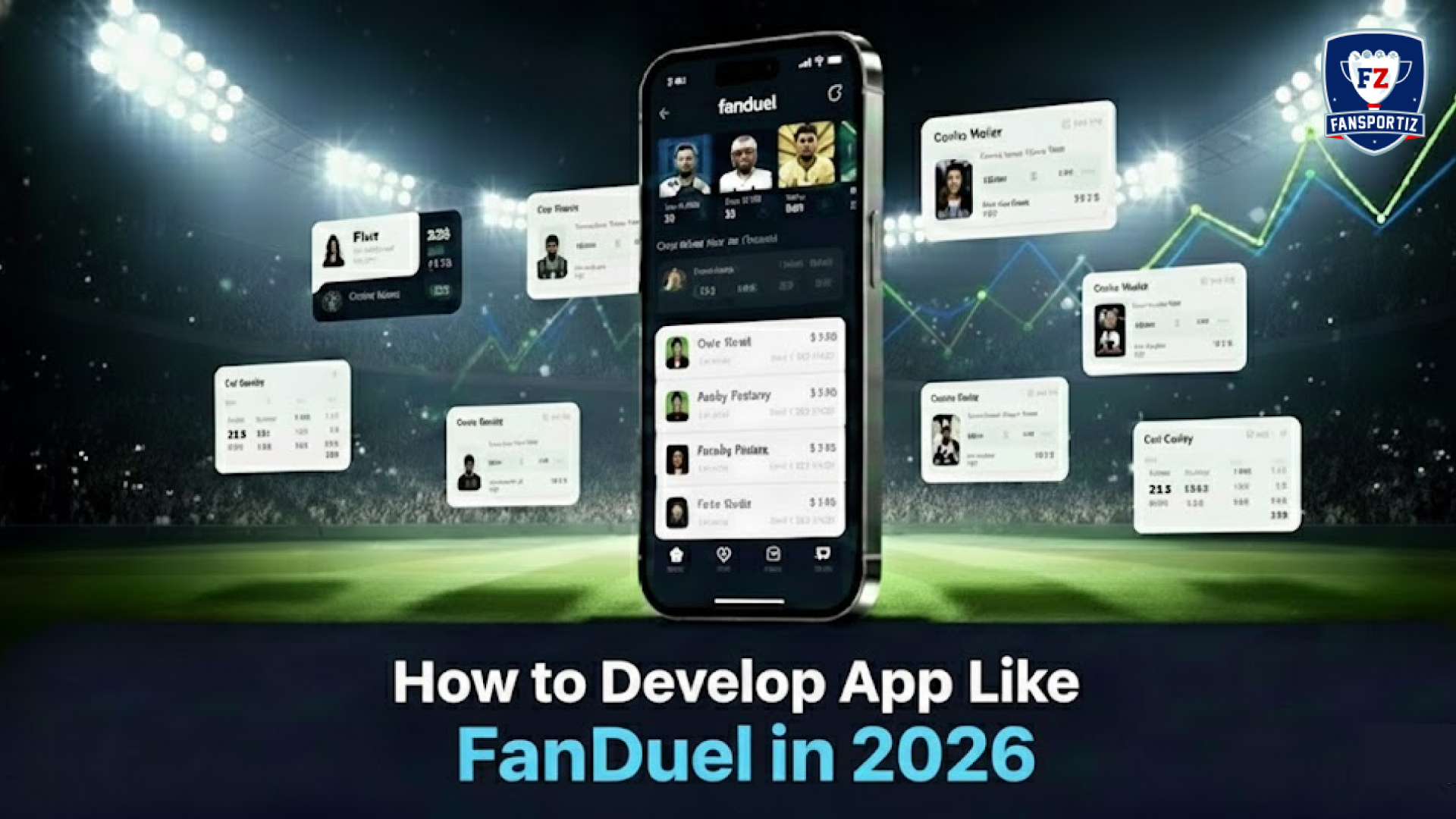
The fantasy sports app industry is really taking off. 2026 looks like a great year to get your own app off the ground. This guide walks you through the essential steps and considerations for developing a successful fantasy sports app like FanDuel.
You’ll learn about the market’s potential, the critical features your app will need, the development process itself, what costs to expect, how to make money, and the vital legal stuff you’ll need to navigate.
What You’ll Need to Get Started
While it’s not a physical list, building an app like FanDuel really comes down to a few key areas:
- Market Insight: You need to know about the fantasy sports market, who your users are, and what the competition is up to.
- Business Sense: Have a clear plan for how you’ll make money and grow.
- Technical Skill: A capable development team or reliable access to development resources is a must.
A Step-by-Step Process To Develop Platform Like FanDuel
Creating a successful fantasy sports app follows a structured path, involving several key stages:
Step 1: Market and Concept Research:
- Pin down your app’s unique idea.
- Figure out who your target users will be.
- Check out what the competition is doing.
- Understand what users actually want and need.
Step 2: Business Model Definition:
- Decide how your app will bring in revenue.
- Outline your core business strategy for growth and profitability.
Step 3: Team Building:
- Put together a development team with the right skills in relevant technologies.
Step 4: Requirement Analysis:
- Clearly list out all the functional requirements (what the app does).
- Also, list the non-functional requirements (how the app performs, like speed and security).
Step 5: UX/UI Design:
- Create wireframes to map out the app’s structure and how users will move through it.
- Develop prototypes to give a feel for the user experience.
- Design an interface that’s intuitive, engaging, and looks good.
Step 6: Technology Stack Selection:
- Choose the right programming languages (like Swift, Kotlin, Python, or JavaScript).
- Pick relevant frameworks (React Native or Flutter are common for cross-platform).
- Select suitable databases (PostgreSQL or MongoDB).
- Identify any third-party APIs you’ll need.
Step 7: Backend Development:
- Build a solid server-side infrastructure that can scale to handle data, logic, and user requests.
Step 8: Frontend Development:
- Develop the user-facing part of the app that people will interact with on their devices.
- Make sure it works smoothly across different platforms.
Step 9: Third Party Integration:
- Connect with third-party services for things like:
- Live sports data feeds.
- Payment processing.
- Identity verification.
- And other essential functions.
Step 10: Security Implementation:
- Put strong security measures in place to protect user data, financial transactions, and prevent fraud.
- Ensure you’re meeting data protection regulations.
Step 11: Thorough Testing and Certification:
- Run comprehensive tests:
- Functional tests (does it work correctly?).
- Performance tests (how does it handle heavy use?).
- Security tests (are there vulnerabilities?).
- Usability tests (is it easy to use?).
- Get any necessary certifications for operating legally.
Step 12: Deployment:
- Launch your application on your target platforms (like the Apple App Store and Google Play Store).
Step 13: Post-Launch Support and Maintenance:
- Keep a close eye on how the app is performing.
- Release regular updates and fix any bugs that pop up.
- Respond to user feedback and make improvements.
- Stay on top of any changes in legal and regulatory requirements.
Pro Tip: Consider starting with a Minimum Viable Product (MVP). This lets you launch faster, get real user feedback, and can be more cost-effective before you commit to full-scale development.
Tips, Examples & Best Practices
- User Experience Matters: Focus on simple navigation, clear screens, and an easy onboarding process.
- Data is Everything: Provide detailed player stats and live scoring updates.
- Security is Non-Negotiable: Prioritize strong security for all financial transactions and user data.
- Plan for Growth: Design the platforms backend to handle sudden surges in traffic, especially during big sporting events.
- Personalize: Use machine learning to offer tailored content, predictions, and suggestions.
- Go Global (If Needed): If you plan to operate internationally, add multi-language support.
- Be Responsive: Offer customer support that’s available around the clock.
- Clone Solution: Use a FanDuel Clone Solution before building a full app. This will save time and reduce your initial investment for testing.
Common Pitfalls to Avoid
- Underestimating Legal Hurdles: Not digging into state-specific regulations, particularly in the U.S.
- Overlooking User Experience: Creating an app packed with features but difficult to use.
- Weak Security: Leaving user data or financial information exposed.
- Poor Data Integration: Relying on unreliable or outdated sports data, leading to inaccurate scores or odds.
- Not Planning for Scalability: Building an app that crashes or becomes sluggish during peak times.
- Skipping Maintenance: Launching the app and then not providing ongoing updates or support.
- Ignoring Responsible Gaming: Failing to implement measures that encourage responsible gaming.
Troubleshooting Common Issues
- App Performance Lag: This could be due to inefficient code, database bottlenecks, or insufficient server capacity. Review backend performance, optimize database queries, and ensure your hosting can handle the load.
- Payment Gateway Problems: Check API integrations, ensure proper authentication with the payment provider, and look for any transaction limits or regional restrictions.
- Data Feed Inaccuracies: Verify the reliability of your chosen data provider. Cross-referencing with other sources can help.
- User Account Glitches: Implement strong user management and verification systems. Make sure password recovery is secure and communication channels for account issues are clear.
Key Takeaways
Developing an app like FanDuel in 2026 means understanding the rapid growth in the fantasy sports market. Key steps include in-depth market research, defining your business model, assembling a skilled team, and focusing on a user-friendly design. Essential features cover everything from user registration and team management to live scoring, secure payments, and admin tools. The development process itself spans from initial concept research all the way through post-launch support. Costs will vary based on how complex your features are and your platform choices. Making money can come from entry fees, commissions, ads, or premium services. Critically, navigating legal and regulatory compliance, including licensing and responsible gaming, is paramount.
Moving Forward
The fantasy sports app market holds significant potential for growth and profitability. By carefully planning, executing each development stage, and prioritizing user experience, security, and legal compliance, you can set your application up for success in 2026 and beyond. Start by refining your concept and gathering the right resources to begin this exciting venture. Partner with a leading fantasy sports app development company and it will help you to develop your dream app.
FAQs:
1. What are the essential tools and resources are needed to build an app like FanDuel?
You will need market research tools, data sources, UI/UX design experts, front-end and back-end development team, real-time sports data feed providers, payment processing services, cloud hosting, and testing platforms.
2. What are the must-have features for a fantasy sports app?
Key features include easy user sign-up and profile setup, secure login, options to create or join leagues, team drafting within a salary cap, live scoring and leaderboards, player stats, secure payment processing, and push notifications.
3. Should I focus first on an MVP when developing a fantasy sports app?
Yes, building a Minimum Viable Product (MVP) is a smart approach. It allows you to launch earlier, gather user feedback, and refine your app before investing heavily in a full-scale build.
4. What are some effective ways to monetize a fantasy sports app?
You can monetize through contest entry fees, taking a percentage of entry fees, advertising and sponsorships, offering premium features via subscription and affiliate partnerships.
5. Why is legal and compliance so important for fantasy sports apps?
Navigating the legal landscape is crucial, especially in the U.S. where laws vary by state. You need to obtain licenses, enforce age restrictions, promote responsible gaming, be transparent about rules, and ensure contests demonstrate skill, which is key in some jurisdictions.
6. How can I ensure my app can handle high traffic loads?
Develop your platform using scalable approaches, such as microservices, to manage sudden spikes in traffic. Ensure your server setup, database performance, and overall application architecture are optimized for growth.
7. What should I do if real-time data feeds are experiencing problems?
First, check the reliability of your data provider. You might need to explore alternative providers or have a backup. Ensure your data connection methods, like WebSockets, are correctly configured.
8. What are the key elements for a successful fantasy sports app?
Key elements include a great user experience, reliable real-time data, strong security measures, adherence to legal requirements, and a plan for scalability.
9. How can I keep my app competitive after launch?
Continuously add new features, fix any bugs that arise, provide excellent user support, and adapt to market trends to keep your app fresh and engaging for users.
