
Published on - May 19th, 2026
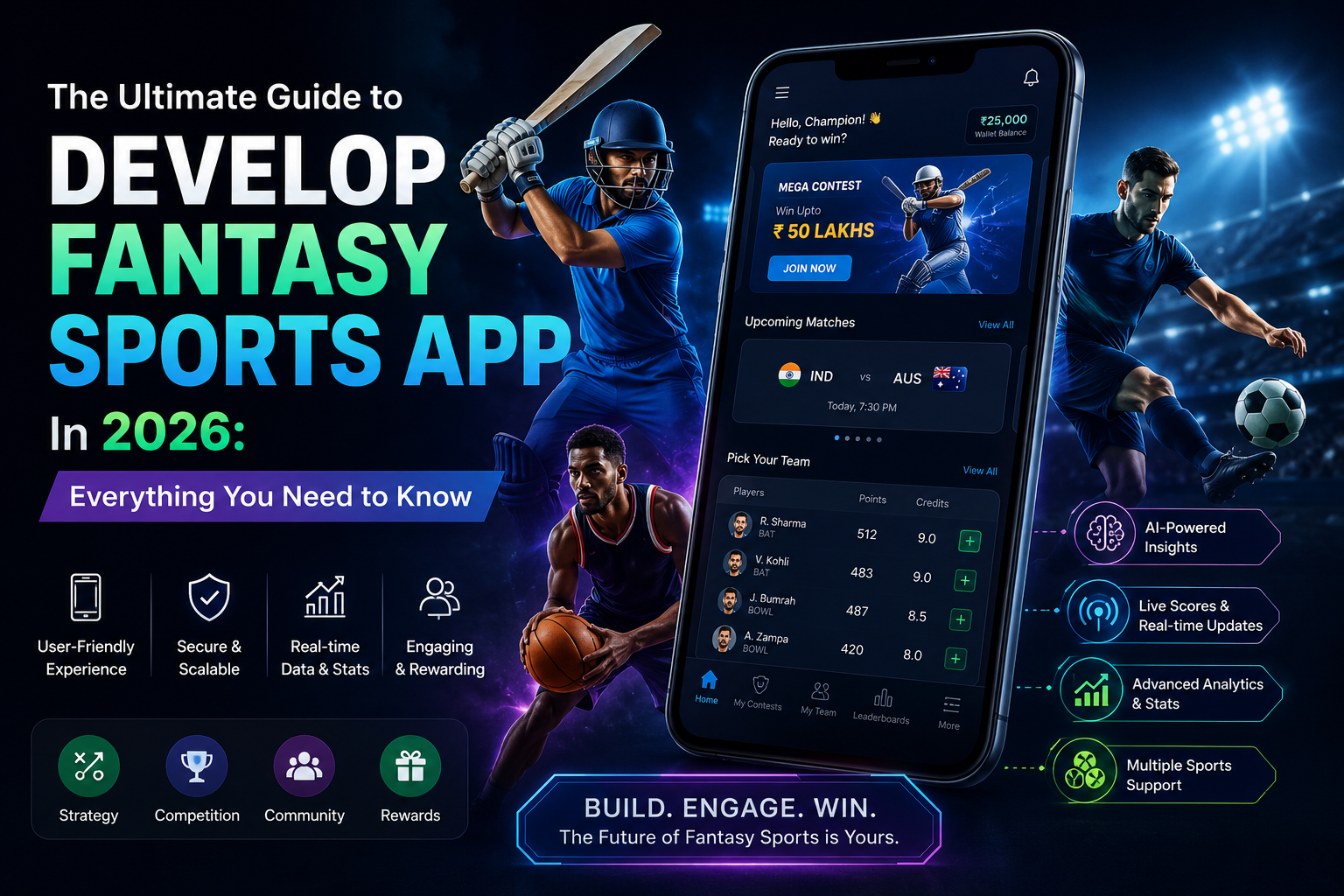
The fantasy sports industry is experiencing an unprecedented boom. Projections show it will reach over $563.8 billion by 2030, growing at a CCAGR of 15.2%. This explosive growth isn’t just a trend; it’s a massive opportunity for entrepreneurs and businesses.
If you’re looking to tap into this lucrative market, you need a clear roadmap. This Complete Guide To Develop Fantasy Sports App In 2026 is your definitive resource. We will equip you with the knowledge to navigate every stage of development.
This comprehensive Fantasy Sports App Development Guide is designed for aspiring business owners, tech innovators, and product managers. It will help you understand the intricacies of building a successful fantasy sports platform. You will master everything from initial concept to post-launch optimization.
Prepare to delve into market analysis, essential features, cutting-edge technologies, and robust monetization strategies. We will cover legal compliance and future trends, ensuring your app is not only competitive but also future-proof. This guide is structured to provide a progressive learning journey, building from foundational concepts to advanced strategies.
Chapter 1: The Foundation of Your Fantasy Sports Empire
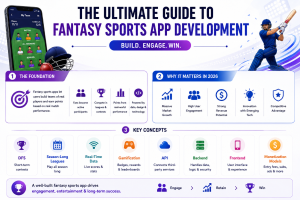
What is Fantasy Sports App Development?
Fantasy sports app development involves creating a digital platform where users can build virtual teams of real-life athletes. These teams then compete based on the actual statistical performance of those players in live games. It’s a blend of sports knowledge, strategy, and real-time engagement.
The core idea is to transform passive sports fans into active participants. Users become virtual general managers, drafting players, managing rosters, and competing in leagues or contests. Points are awarded based on predefined scoring systems, reflecting real-world actions like goals, assists, touchdowns, or strikeouts.
This process is more than just coding; it encompasses UI/UX design, robust backend architecture, and complex data integration. It requires a deep understanding of sports mechanics and user psychology. The goal is to deliver an immersive and competitive experience.
This Complete Guide To Fantasy Sports App Development will help you understand the technical and strategic layers involved. You will learn how to build an application that stands out in a crowded market. It’s about crafting a platform that offers both entertainment and strategic depth.
Why Fantasy Sports App Development Matters in 2026
The landscape of sports entertainment is rapidly evolving, making fantasy sports app development a critical venture in 2026. Fans are no longer content with just watching games; they demand interactive, skill-based experiences. This shift fuels the massive growth of the fantasy sports market.
For businesses, this translates into significant opportunities for revenue generation and user engagement. Fantasy sports apps boast high user retention rates, with players spending considerable time within the platforms. This consistent engagement creates fertile ground for diverse monetization models.
A well-executed Guide To Fantasy Sports App Development can help you capitalize on this demand. It allows you to build a platform that attracts and retains a loyal user base. Ignoring this trend means missing out on a rapidly expanding digital economy.
Moreover, the industry is ripe for innovation, particularly with emerging technologies. Early adoption of AI, blockchain, and AR/VR can provide a substantial competitive edge. This isn’t just about building an app; it’s about securing a foothold in the future of sports entertainment.
Key Concepts and Terminology
Navigating the world of fantasy sports app development requires understanding specific terms. Familiarizing yourself with these concepts will streamline your planning and communication.
Daily Fantasy Sports (DFS)
Daily Fantasy Sports (DFS) are short-term fantasy contests where users draft teams for a single day or week. Winners are determined quickly based on the real-life performance of players during that period, providing users with immediate results and engagement. Popular platforms such as DraftKings and FanDuel are leading examples in this category.
Season-Long Leagues
Season-long fantasy leagues are traditional fantasy sports formats where users draft a team before the sports season begins and manage it throughout the entire season. Participants continuously improve their teams through player trades, waiver pickups, and strategic decisions. This format emphasizes long-term planning, consistency, and in-depth sports knowledge.
Real-Time Data Integration
Real-time data integration refers to the process of fetching live scores, player statistics, and match updates from actual sports events. This functionality is essential for updating fantasy points, rankings, and leaderboards instantly within the application. Sports data APIs play a critical role in delivering accurate and timely information to users.
Gamification
Gamification involves adding game-like elements to the application to enhance user engagement and retention. Features such as badges, achievements, leaderboards, rewards, and challenges encourage participation and create a competitive environment. These elements make the platform more interactive and enjoyable for users.
API (Application Programming Interface)
An API (Application Programming Interface) is a set of rules and protocols that enables different software systems to communicate with each other. APIs are essential for integrating third-party services such as sports data providers, payment gateways, authentication systems, and social media features into the application.
Backend
The backend is the server-side component of the application responsible for managing data storage, business logic, user authentication, and communication with databases. It acts as the core engine of the platform, ensuring secure operations, data processing, and smooth functionality behind the scenes.
Frontend
The frontend is the user-facing side of the application that users directly interact with through mobile apps or web browsers. It includes the UI/UX design, navigation, visual components, and interactive features that create the overall user experience.
Monetization Models
Monetization models are strategies used to generate revenue from the application. Common methods include entry fees for contests, subscription plans, in-app purchases, advertising, and premium features. Choosing the right monetization strategy is important for maintaining profitability and long-term business growth.
Chapter 2: Getting Started: Your Development Roadmap
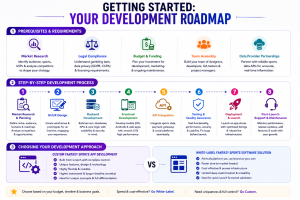
Prerequisites and Requirements
Before diving into development, you need to lay a solid groundwork. This initial phase defines your project’s scope and ensures you have the necessary resources.
First, conduct thorough market research. Identify your target audience, preferred sports, and unique selling proposition. Understand what competitors offer and where you can differentiate. This research informs your entire product strategy.
Next, secure legal counsel. Fantasy sports operate in a complex regulatory environment, varying by region. You’ll need to understand gambling laws, data privacy regulations (like GDPR or CCPA), and licensing requirements. Compliance is non-negotiable.
Determine your budget and funding sources. Developing a robust fantasy sports app requires significant investment. Outline your financial plan for development, marketing, and ongoing maintenance.
Assemble your team. This includes UI/UX designers, frontend and backend developers, QA testers, and project managers. You might opt for an in-house team or partner with a specialized development company.
Finally, identify reliable sports data providers. Access to accurate, real-time data is the lifeblood of any fantasy sports app. Research and secure agreements with reputable sports data APIs. This Complete Guide To Fantasy Sports App Development emphasizes these foundational steps for long-term success.
Step-by-Step Development Process
Building a fantasy sports app is a multi-stage journey. Following a structured process ensures efficiency, quality, and alignment with your vision.
Market Research & Planning
The development process begins with thorough market research and strategic planning. This includes defining your niche, identifying the target audience, and determining the core features of the fantasy sports app. Competitor analysis helps uncover market gaps and opportunities for differentiation. A detailed product roadmap should also be created, outlining user flows, feature priorities, and monetization strategies to guide the development process effectively.
UI/UX Design
UI/UX design focuses on creating an intuitive, engaging, and visually appealing user experience. Designers develop wireframes and interactive prototypes to map out user journeys and app interactions. A seamless and user-friendly interface is essential for improving user retention, increasing engagement, and ensuring smooth navigation throughout the platform.
Backend Development
Backend development involves building the server-side infrastructure that powers the application. This includes setting up databases for player statistics, user accounts, contest information, and transaction records. Developers also create APIs for real-time sports data integration, payment processing, and user management. Scalability and security are critical considerations to ensure the platform can handle growing user demand efficiently.
Frontend Development
Frontend development transforms design concepts into fully functional applications for users. This stage includes building mobile applications for iOS and Android, and in some cases, a responsive web platform. The focus is placed on performance, responsiveness, smooth animations, and maintaining a consistent experience across different devices and screen sizes.
API Integration
API integration connects the application with third-party services required for core functionality. This includes integrating sports data providers for live statistics, secure payment gateways for transactions, and social media platforms for user engagement and sharing. Reliable API integrations are essential to ensure accurate data delivery and uninterrupted app performance.
Testing & Quality Assurance
Testing and quality assurance ensure the application performs reliably under different conditions. This process includes functional testing, performance testing, security testing, and usability testing. Special attention is given to validating scoring systems, leaderboard accuracy, and payment workflows. All identified bugs and glitches must be resolved before launch to provide a stable user experience.
Deployment & Launch
Deployment and launch involve preparing the application for public release on platforms such as the Google Play Store and Apple App Store. This stage includes optimizing app store listings with compelling descriptions, screenshots, and promotional materials. Developers also configure the live server infrastructure to support real-time operations and user traffic.
Post-Launch Support & Maintenance
Post-launch support and maintenance are essential for the long-term success of the application. After release, developers continuously monitor app performance, gather user feedback, and deploy updates to improve functionality. This phase includes introducing new features, fixing bugs, enhancing security, and scaling infrastructure as the user base grows. An iterative improvement approach helps maintain user satisfaction and sustained business growth.
Choosing Your Development Approach: Custom vs. White-Label
When beginning your fantasy sports app development journey, one of the most important decisions is choosing between custom development and a white-label solution. A custom-built application offers complete flexibility, unique features, and full control over design and functionality, making it ideal for businesses seeking a highly personalized platform. However, it typically requires higher investment, longer development timelines, and dedicated technical resources.
On the other hand, a white-label solution provides a pre-built framework that can be customized with your branding and basic feature modifications. This approach significantly reduces development time and cost, allowing businesses to launch quickly. While white-label platforms are cost-effective and faster to deploy, they may offer limited customization and scalability compared to fully custom-built solutions. Selecting the right approach depends on your budget, business goals, timeline, and long-term growth strategy.
Custom Fantasy Sports App Development:
Building a custom app means developing every aspect from the ground up. You have complete control over features, design, and technology stack. This allows for unique functionalities, hyper-personalization, and strong brand differentiation.
The main benefits include unparalleled flexibility and scalability tailored to your specific vision. However, it typically requires a larger budget and a longer development timeline, often spanning several months. This approach is ideal if you have a unique concept or require highly specialized features not available off-the-shelf.
White-Label Fantasy Sports Software Solution:
A white-label solution is a pre-built, customizable platform that you can brand as your own. It comes with core features and a proven infrastructure, allowing for rapid deployment. This significantly reduces development time and initial costs.
White-label solutions are excellent for market validation or quick entry into new regions. They offer a faster time-to-market, often within weeks. The trade-off is less flexibility in deep customization and a potential lack of unique features compared to a bespoke solution.
Your choice depends on your budget, timeline, and the uniqueness of your business model. If you prioritize speed and cost-effectiveness, white-label might be suitable. If differentiation and full control are paramount, custom development is the way to go.
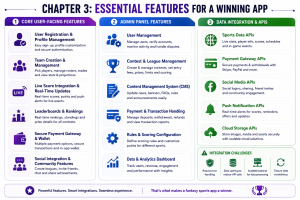
Chapter 3: Essential Features for a Winning App
Core User-Facing Features
A successful fantasy sports app hinges on a robust set of user-facing features that drive engagement and provide a seamless experience. These are the functionalities your users will interact with daily.
User Registration & Profile Management
Provide users with multiple registration options, including email, phone number, and social media logins such as Google and Facebook. The onboarding process should be simple, fast, and user-friendly to reduce drop-offs during sign-up. Users should also be able to create and customize their profiles with avatars, team names, and preferred sports. To ensure account security and protect sensitive user data, implement secure authentication methods such as OTP verification and two-factor authentication (2FA).
Team Creation & Management
Team creation and management form the core of the fantasy sports experience. Users should be able to easily select real-world players while staying within a predefined budget or credit limit. The platform should provide comprehensive player information, including statistics, injury reports, recent performance, and projections to help users make informed decisions. Additionally, intuitive roster management features such as substitutions, trades, and waivers should be included to enhance strategic gameplay.
Live Score Integration & Real-Time Updates
Real-time updates are essential for maintaining user engagement and excitement. The app should integrate live scoring systems based on actual player performances during ongoing matches. Dynamic updates for scores, fantasy points, and player actions should be displayed instantly. Push notifications for live game events, lineup changes, score updates, and matchup reminders help keep users actively involved throughout contests.
Leaderboards & Rankings
Leaderboards and rankings provide users with a competitive and rewarding experience. The application should display real-time rankings for contests, tournaments, and private leagues. Information such as user standings, team scores, prize distributions, and performance metrics should be presented clearly. This feature motivates users to compete actively and track their progress against other participants.
Secure Payment Gateway & Wallet
A secure payment system is crucial for handling transactions within the fantasy sports platform. Users should be able to deposit funds, pay contest entry fees, and withdraw winnings safely and conveniently. Integration with multiple payment methods, including credit cards, debit cards, e-wallets, and UPI services, improves accessibility and user convenience. An in-app wallet should also provide transparency by displaying transaction history, deposits, withdrawals, and winnings.
Social Integration & Community Features
Social and community features help increase user engagement and retention. Users should be able to create private leagues, invite friends, and share their teams or achievements through social media platforms. In-app chat and communication features encourage interaction, friendly competition, and community building among users. These social elements contribute significantly to organic growth and long-term user loyalty.
Admin Panel Features
While users interact with the frontend, a powerful admin panel is essential for you to manage and control the entire app ecosystem. These backend tools ensure smooth operation, content management, and user oversight.
User Management
User management provides administrators with comprehensive control over user accounts and activities within the platform. This includes the ability to view, edit, verify, or restrict user profiles when necessary. Administrators can monitor user behavior, handle disputes, address suspicious activities, and ensure fair gameplay across contests and leagues. Effective user management helps maintain platform security, transparency, and trust among participants.
Contest & League Management
Contest and league management enables administrators to create, edit, and manage different types of fantasy contests and leagues efficiently. Admins can configure entry fees, prize pools, participant limits, contest durations, and scoring systems based on business requirements. The system also allows scheduling upcoming contests, monitoring live competitions, and archiving completed events for future reference and reporting.
Content Management System (CMS)
A Content Management System (CMS) allows administrators to manage all static and dynamic content within the application from a centralized dashboard. This includes updating news articles, player information, game rules, FAQs, banners, promotional content, and announcements. A robust CMS makes it easier to keep the platform updated, improve user engagement, and deliver personalized content experiences.
Payment & Transaction Handling
Payment and transaction handling features provide administrators with complete oversight of all financial activities on the platform. This includes managing user deposits, withdrawals, contest entry fees, refunds, and prize distributions securely. Administrators can also generate transaction reports, monitor revenue streams, and ensure compliance with financial and payment regulations. A secure and transparent payment system is essential for building user confidence and operational reliability.
Rules & Scoring Configuration
Rules and scoring configuration allow administrators to customize the fantasy sports gameplay experience. Admins can define how points are awarded for different player performances and actions across various sports categories. This flexibility enables the platform to adapt to changing sports seasons, tournament formats, or unique game variations while maintaining accurate and fair scoring systems.
Data & Analytics Dashboard
A data and analytics dashboard provides real-time insights into platform performance, user engagement, and business growth. Administrators can monitor key metrics such as active users, contest participation, revenue generation, retention rates, and popular game formats. These analytics help businesses make data-driven decisions, optimize marketing strategies, improve user experiences, and identify opportunities for future growth.
Data Integration and APIs
The lifeblood of any fantasy sports app is accurate, real-time data. Seamless data integration via APIs is non-negotiable for providing an engaging and dynamic user experience.
Sports Data APIs
Sports data APIs are external services that provide live and historical sports statistics required for fantasy sports applications. These APIs deliver information such as player profiles, injury reports, match schedules, live scores, and detailed in-game events. Choosing reliable and low-latency sports data providers is essential to ensure real-time updates, accurate scoring, and a seamless user experience within the platform.
Payment Gateway APIs
Payment gateway APIs enable secure financial transactions within the fantasy sports application. By integrating trusted payment providers such as Stripe and PayPal, users can safely deposit funds, pay contest entry fees, and withdraw winnings. Security standards and compliance requirements such as PCI DSS play a critical role in protecting sensitive financial data and maintaining transaction reliability.
Social Media APIs
Social media APIs allow the application to integrate with platforms such as Facebook, Google, and Twitter for authentication and social engagement features. These integrations simplify user registration, enable social sharing, support friend invitations, and help build a stronger community within the platform. Social connectivity also contributes to improved user acquisition and retention.
Push Notification APIs
Push notification APIs help deliver real-time alerts and updates directly to users’ devices. Services such as Firebase Cloud Messaging and Apple Push Notification Service enable notifications for live score updates, contest reminders, promotional offers, and important announcements. These notifications play a major role in improving user engagement and encouraging active participation.
Cloud Storage APIs
Cloud storage APIs provide scalable and secure solutions for storing user-generated content, profile images, application assets, and other media files. Services such as Amazon Web Services S3 and Google Cloud Storage offer reliable infrastructure for efficient file uploads, storage management, and content retrieval. Cloud storage integration ensures high availability, scalability, and data security as the platform grows.
Integration Challenges: Managing multiple APIs requires careful planning. You’ll need robust error handling, data caching strategies to reduce API calls, and a scalable backend to process incoming data efficiently. Ensuring data consistency across all integrated services is also a key consideration.
Chapter 4: Advanced Strategies & Future-Proofing Your App
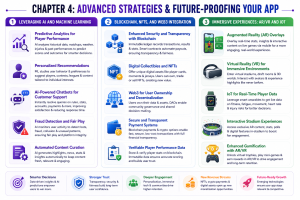
Leveraging AI and Machine Learning
To truly differentiate your fantasy sports app in 2026, integrating AI and Machine Learning (ML) is no longer optional—it’s essential. These technologies can transform user experience and operational efficiency.
Predictive Analytics for Player Performance
AI-powered predictive analytics can analyze large volumes of historical player data, team matchups, weather conditions, injury reports, and past game performances. These insights help generate highly accurate predictions for player scores and match outcomes. By providing users with data-driven recommendations and performance forecasts, the platform enables smarter team selection and enhances the overall strategic gameplay experience.
Personalized Recommendations
Machine learning algorithms can study individual user behavior, preferences, playing history, and team selection patterns to deliver personalized recommendations. Based on this analysis, the app can suggest suitable players, contests, leagues, and relevant content tailored to each user’s interests. This level of personalization improves user engagement, increases retention, and creates a more customized fantasy sports experience.
AI-Powered Chatbots for Customer Support
AI-powered chatbots can provide instant customer support by handling common user queries efficiently. These chatbots can answer questions related to contest rules, player statistics, account issues, payments, and troubleshooting in real time. By automating routine support tasks, businesses can reduce response times, improve customer satisfaction, and allow human support teams to focus on more complex concerns.
Fraud Detection and Fair Play
Artificial Intelligence can play a crucial role in maintaining fair competition within the fantasy sports platform. AI systems can monitor user activity patterns to identify suspicious behavior such as bot usage, fraudulent transactions, or collusion between users. Machine learning models can detect unusual activity and flag potential violations automatically, helping ensure platform integrity, fair gameplay, and user trust.
Automated Content Curation
AI can automate the process of content generation and curation by creating summaries of game highlights, player performances, news updates, and statistical insights. This helps keep the platform updated with fresh and relevant content without requiring continuous manual effort. Automated content delivery enhances user engagement by providing timely information and improving the overall user experience.
Blockchain, NFTs, and Web3 Integration
Embracing blockchain technology, Non-Fungible Tokens (NFTs), and the broader Web3 paradigm can future-proof your fantasy sports app. These innovations offer enhanced security, transparency, and new monetization avenues.
Enhanced Security and Transparency with Blockchain
Blockchain technology provides a decentralized and immutable ledger system that can securely record in-app transactions, contest outcomes, and player statistics. This creates a tamper-proof environment that enhances transparency and ensures fair gameplay. By using smart contracts, prize payouts and contest settlements can be automated securely without requiring manual intervention, reducing the risk of disputes or data manipulation.
Digital Collectibles and NFTs
NFTs (Non-Fungible Tokens) can be integrated into fantasy sports applications to represent unique digital assets such as star player cards, memorable game moments, limited-edition team jerseys, or exclusive rewards. These digital collectibles provide users with a sense of ownership and exclusivity. Users can also trade or sell NFTs on secondary marketplaces, opening new monetization opportunities and creating a dynamic in-app digital economy.
Web3 for User Ownership and Decentralization
Web3 technologies focus on decentralization and increased user ownership. In a Web3-enabled fantasy sports platform, users can have greater control over their personal data, digital assets, and in-app identities. Decentralized Autonomous Organizations (DAOs) may also allow community members to participate in governance by voting on platform rules, new features, or contest formats. This approach encourages stronger community engagement and shared decision-making.
Secure and Transparent Payment Systems
Blockchain-based payment systems offer secure, transparent, and efficient financial transactions within the platform. Cryptocurrency integration can provide users with alternative payment methods for contest entries, rewards, and in-app purchases. These systems often enable faster transaction processing, lower fees, and enhanced financial transparency compared to traditional banking solutions, improving the overall payment experience.
Verifiable Player Performance Data
Blockchain technology can also be used to store and verify player performance data securely. Since blockchain records are immutable, player statistics and scoring information can be verified transparently without the risk of alteration. This strengthens the integrity of fantasy scoring systems, minimizes disputes, and builds greater trust among users participating in contests and leagues.
Immersive Experiences: AR/VR and IoT
To truly captivate users in 2026, consider integrating Augmented Reality (AR), Virtual Reality (VR), and the Internet of Things (IoT). These technologies offer unparalleled immersive experiences and real-time data insights.
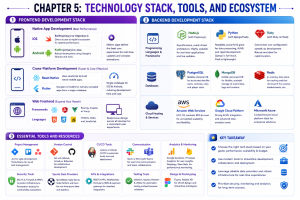
Frontend Development Stack
The frontend is what your users see and interact with. Choosing the right frontend technology stack is crucial for delivering a smooth, responsive, and engaging user experience.
Native App Development: For unparalleled performance and access to device-specific features, native development is often preferred.
iOS: Swift (primary) or Objective-C. These languages provide direct access to Apple’s ecosystem, ensuring optimal performance and adherence to design guidelines.
Android: Kotlin (primary) or Java. These offer robust development for the Android platform, leveraging Google’s extensive libraries and tools. Native apps deliver the best user experience, crucial for real-time updates and complex animations.
Cross-Platform Development: If your goal is faster development and a single codebase for both iOS and Android, cross-platform frameworks are excellent.
React Native: Uses JavaScript, allowing developers to build native mobile apps. It offers good performance and a large community.
Flutter: Google’s UI toolkit for building natively compiled applications for mobile, web, and desktop from a single codebase. Known for its expressive UI and fast development cycles. These options reduce development time and cost, making them attractive for startups.
Web Frontend: A web-based version of your app can expand your reach.
Frameworks: React.js, Angular, or Vue.js are popular choices for building dynamic, single-page applications. They offer component-based architectures and efficient data handling.
Languages: HTML5, CSS3, and JavaScript form the core. Ensuring a responsive design across all devices is key for a consistent user experience.
Backend Development Stack
The backend is the engine of your fantasy sports app, handling data, logic, and server operations. A robust and scalable backend is essential for real-time performance and managing high user loads.
Programming Languages & Frameworks:
Node.js (with Express.js): Excellent for real-time applications due to its asynchronous, event-driven nature. It’s highly scalable and efficient for handling many concurrent connections, perfect for live score updates.
Python (with Django/Flask): Known for its readability and extensive libraries, Python is great for complex data processing, AI/ML integrations, and rapid development. Django provides a comprehensive framework, while Flask is lightweight.
Ruby (with Ruby on Rails): Offers convention over configuration, speeding up development. It’s robust and suitable for applications requiring rapid iteration.
Databases:
PostgreSQL: A powerful, open-source relational database known for its reliability, feature richness, and ability to handle complex queries. Ideal for structured data like user profiles, contest rules, and player statistics.
MongoDB: A NoSQL document database, offering flexibility and scalability for unstructured or semi-structured data. Great for user activity logs, real-time game events, and dynamic content.
Redis: An in-memory data store, often used as a cache or message broker. Crucial for lightning-fast retrieval of frequently accessed data, like live scores or leaderboards, reducing database load.
Cloud Hosting & Services:
AWS (Amazon Web Services): Offers a vast array of services (EC2 for compute, S3 for storage, Lambda for serverless functions, RDS for databases) providing unparalleled scalability and flexibility.
Google Cloud Platform (GCP): Provides competitive services with strong AI/ML integration and excellent data analytics tools.
Microsoft Azure: A comprehensive cloud platform, particularly strong for enterprises already using Microsoft technologies. Cloud providers ensure your app can handle traffic spikes and global distribution efficiently.
Essential Tools and Resources
Beyond the core tech stack, a suite of tools and resources is vital for efficient development, deployment, and ongoing management of your fantasy sports app.
Project Management Tools:
Jira: Ideal for agile development, tracking tasks, bugs, and project progress.
Trello/Asana: Great for smaller teams or visual task management, offering clear oversight of workflows. These tools ensure your team stays organized and on schedule.
Version Control Systems:
Git (with GitHub/GitLab/Bitbucket): Essential for collaborative coding, managing code changes, and maintaining a history of your project. It prevents conflicts and facilitates teamwork.
CI/CD (Continuous Integration/Continuous Deployment) Tools:
Jenkins/GitLab CI/CD: Automate the build, test, and deployment processes. This speeds up development cycles, reduces manual errors, and ensures consistent code quality.
Communication & Collaboration Platforms:
Slack/Microsoft Teams: Facilitate real-time communication, file sharing, and team collaboration. Essential for distributed teams.
Analytics & Monitoring Tools:
Google Analytics/Firebase Analytics: Track user behavior, app performance, and engagement metrics. Provide insights for informed decision-making.
Datadog/New Relic: Monitor server performance, API response times, and identify bottlenecks in real-time. Crucial for maintaining app stability under high load.
Security Tools:
SSL/TLS Certificates: Encrypt data in transit, securing communication between your app and servers.
Firewalls & WAFs (Web Application Firewalls): Protect your backend infrastructure from malicious attacks.
Penetration Testing Services: Regularly test your app for vulnerabilities to ensure robust security.
Sports Data Providers:
SportsRadar, Opta Sports, Stats Perform: These are leading providers of comprehensive, real-time sports data APIs. They are indispensable for accurate scoring and player statistics.
Chapter 6: Navigating Challenges and Ensuring Compliance
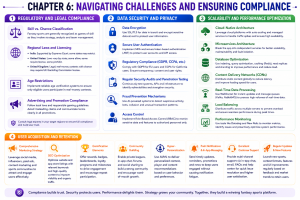
Regulatory and Legal Compliance
Launching a fantasy sports app means navigating a complex web of legal and regulatory requirements. Ignoring these can lead to severe penalties and loss of user trust.
Consulting with legal experts specializing in gaming and sports law in your target regions is paramount. This proactive approach ensures your app operates within legal boundaries and builds user confidence.
Data Security and Privacy
In an era of increasing cyber threats and privacy concerns, robust data security and privacy measures are non-negotiable for your fantasy sports app. User trust hinges on your ability to protect their information.
Scalability and Performance Optimization
A fantasy sports app must handle massive traffic spikes, especially during major sporting events or popular contest deadlines. Ensuring scalability and optimal performance is critical for user satisfaction and retention.
User Acquisition and Retention
Building a great app is only half the battle; acquiring and retaining users is crucial for long-term success. A strategic approach to user acquisition and retention is vital in the competitive fantasy sports market.
Comprehensive Marketing Strategy
A successful fantasy sports platform requires a well-planned multi-channel marketing strategy to attract and retain users. This includes digital advertising through social media platforms, search engine marketing, influencer collaborations, and paid campaigns targeting sports enthusiasts. Content marketing strategies such as blogs, sports guides, tutorials, and video content can also help establish authority and improve audience engagement across different channels.
SEO Optimization
Search Engine Optimization (SEO) and App Store Optimization (ASO) are essential for increasing visibility and attracting organic traffic. Optimizing website content and app store listings with relevant keywords such as “fantasy sports app” or “fantasy football app development” helps improve search rankings and discoverability. Well-optimized titles, descriptions, screenshots, and user reviews contribute significantly to increasing app downloads and user acquisition.
Gamification Elements
Gamification features help improve user engagement and encourage long-term participation within the platform. Elements such as daily login rewards, achievement badges, leaderboards, loyalty programs, and milestone rewards create a more interactive and competitive experience. These incentives motivate users to stay active, participate in contests regularly, and spend more time on the platform.
Community Building
Building a strong user community is essential for increasing engagement and organic growth. Features such as private leagues, in-app chat systems, discussion forums, and social sharing tools encourage user interaction and friendly competition. Allowing users to invite friends and participate together helps strengthen community relationships while promoting word-of-mouth marketing.
Hyper-Personalization
AI and machine learning technologies can be used to deliver highly personalized experiences based on user behavior, preferences, and activity history. Personalized contest recommendations, player suggestions, notifications, and content improve user satisfaction and engagement. Hyper-personalization helps make the platform feel more relevant and responsive to individual users, increasing retention rates.
Push Notifications & In-App Messaging
Push notifications and in-app messaging are powerful tools for maintaining user engagement. Real-time alerts for score updates, contest reminders, promotions, and player news help keep users connected to the platform. In-app messages can also guide users toward new features, exclusive offers, or onboarding tutorials. Notifications should be used strategically to avoid overwhelming users and causing notification fatigue.
Excellent Customer Support
Responsive and reliable customer support plays a major role in building user trust and loyalty. Fantasy sports platforms should provide support through multiple channels such as in-app chat, email, FAQs, and help centers. Prompt resolution of user issues, payment concerns, and technical problems improves the overall user experience and strengthens customer relationships.
Regular Updates & New Features
Consistent updates and feature enhancements help keep the platform competitive and engaging. Introducing new sports categories, contest formats, gameplay features, and UI improvements based on user feedback and market trends ensures the platform remains fresh and relevant. Regular innovation encourages users to continue using the app and supports long-term growth and retention.
Chapter 7: Monetization Strategies for Profitability
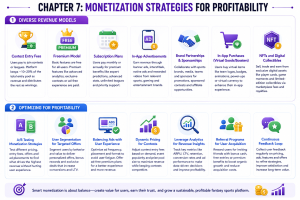
Diverse Revenue Models
A successful fantasy sports app needs a robust monetization strategy that balances profitability with user experience. Relying on a single revenue stream can limit your potential.
Optimizing for Profitability
Simply implementing revenue models isn’t enough; you need to optimize them for maximum profitability while maintaining a positive user experience. This requires data-driven decisions and continuous refinement.
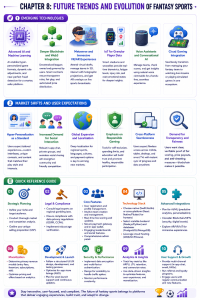
Emerging Technologies
The fantasy sports landscape is constantly evolving, driven by technological advancements. To stay ahead in 2026 and beyond, you must embrace these emerging technologies.
Advanced AI and Machine Learning:
Beyond predictive analytics, AI will enable hyper-personalized game formats. Imagine AI-generated opponents tailored to your skill level, or dynamic rule adjustments based on real-time game flow. ML will refine fraud detection to near-perfect accuracy.
Deeper Blockchain and Web3 Integration:
Expect more than just NFTs. Web3 will foster truly decentralized fantasy leagues where users collectively own and govern the platform. Smart contracts will manage complex league rules and prize distributions autonomously, ensuring ultimate fairness and transparency.
Metaverse and Immersive VR/AR Experiences:
The metaverse will offer persistent virtual spaces for fantasy sports. Users could attend virtual draft parties, manage their teams in a 3D environment, or even interact with holographic player projections. AR will provide real-time game overlays directly onto live sports broadcasts.
oT for Granular Player Data:
Integration with smart stadiums and wearable tech will provide unprecedented access to player biometrics and performance data. This could include real-time fatigue levels, injury risk assessments, or even emotional states, offering a new dimension for strategic decision-making.
Voice Assistants and Conversational AI:
Manage your fantasy team using voice commands. “Alexa, what’s my team’s score?” or “Siri, swap out Player X for Player Y.” Conversational AI will make app interaction more natural and hands-free, enhancing accessibility and convenience.
Cloud Gaming Integration:
As cloud gaming grows, fantasy sports apps might integrate directly, allowing users to seamlessly transition from managing their team to watching live streams or even playing simulated games within the same ecosystem.
Market Shifts and User Expectations
Beyond technology, understanding evolving market dynamics and user expectations is crucial for the sustained success of your fantasy sports app. The industry is maturing, and so are its users.
Hyper-Personalization as a Standard:
Users will expect highly personalized experiences, not just recommendations. This includes customizable interfaces, unique contest formats based on their play style, and content tailored to their favorite teams and players. Generic experiences will no longer suffice.
Increased Demand for Social Interaction:
Fantasy sports are inherently social. Users will seek more robust in-app social features, including enhanced chat, private group functionalities, and seamless sharing across social media platforms. The sense of community and competition among friends will be a primary driver.
Global Expansion and Localization:
The market will continue to expand beyond traditional strongholds. Success will require deep localization, adapting to regional sports preferences, languages, cultural nuances, and local payment methods. A one-size-fits-all approach will fail.
Emphasis on Responsible Gaming:
As the industry grows, so will the focus on responsible gaming practices. Apps will need to integrate tools for self-exclusion, spending limits, and educational resources to promote healthy participation. Building a trustworthy and ethical platform is paramount.
Cross-Platform Seamlessness:
Users expect to access their fantasy teams from any device – mobile, tablet, desktop, and even smart TVs. A truly seamless cross-platform experience, where progress and data sync instantly, will be a key differentiator.
Demand for Transparency and Fairness:
With increasing stakes, users will demand absolute transparency in scoring, prize distribution, and anti-cheating measures. Blockchain integration can play a significant role here, providing verifiable proof of fair play.
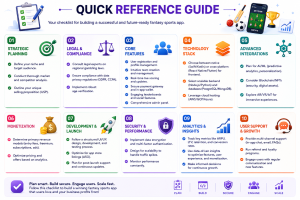
Quick Reference Guide
Conclusion
The journey to develop a fantasy sports app in 2026 is complex yet incredibly rewarding. You’ve navigated the foundational concepts, explored essential and advanced features, delved into technology stacks, and understood critical compliance and monetization strategies. This Fantasy Sports App Development Guide has equipped you with a comprehensive understanding of what it takes to succeed.
The key takeaways are clear: prioritize user experience, embrace emerging technologies like AI and blockchain, ensure robust security, and meticulously plan for scalability and legal compliance. The market demands innovation and a deep understanding of your audience.
As you move forward, remember that the fantasy sports landscape is dynamic. Continuous learning, adaptation, and a commitment to excellence will be your greatest assets. The opportunity to create a captivating and profitable platform is immense.
Ready to turn your vision into a reality? Partner with a leading Fantasy Sports App Development Company that understands these complexities. Fansportiz offers white-label and fully custom solutions, building high-performance apps with real-time data, live scoring, and secure payment integration. We help startups and enterprises launch their own fantasy sports platforms quickly and cost-effectively. Take the next step and bring your fantasy sports empire to life.
Fantasy Sports App Development FAQs
Everything you need to know about building a successful fantasy sports platform in 2026.
1. What is covered in this Fantasy Sports App Development Guide?
This Fantasy Sports App Development Guide provides a comprehensive roadmap for building a successful fantasy sports app in 2026. It covers everything from initial market analysis and essential features to cutting-edge technologies like AI and blockchain, legal compliance, and robust monetization strategies. Designed for entrepreneurs and tech innovators, it ensures you master every stage from concept to post-launch optimization, preparing you to tap into the lucrative fantasy sports market.
2. Why is 2026 a crucial year for fantasy sports app development?
2026 is pivotal due to the unprecedented boom in the fantasy sports industry, projected to exceed $563.8 billion by 2030. Fans increasingly demand interactive, skill-based experiences, creating massive opportunities for revenue and engagement. Early adoption of emerging technologies like AI, blockchain, and AR/VR can provide a significant competitive edge, making it an opportune time to launch an innovative platform.
3. What are the essential features for a winning fantasy sports app?
A winning fantasy sports app requires core user-facing features like intuitive user registration, team creation and management, real-time live score integration, leaderboards, and secure payment gateways. Additionally, a robust admin panel for user, contest, and content management, along with reliable sports data APIs, are crucial for smooth operation and an engaging user experience.
4. How can AI and Machine Learning enhance a fantasy sports app?
AI and Machine Learning can revolutionize a fantasy sports app by offering predictive analytics for player performance, personalized recommendations for users, and AI-powered chatbots for instant customer support. These technologies also bolster fraud detection, ensuring fair play, and can automate content curation, providing users with timely and valuable insights to optimize their strategic gameplay.
5. How does this Fantasy Sports App Development Guide address monetization?
This Fantasy Sports App Development Guide explores diverse revenue models, including contest entry fees, freemium models, subscription plans, in-app advertisements, and brand partnerships. It also provides strategies for optimizing profitability, such as A/B testing, user segmentation for targeted offers, balancing ads with user experience, and leveraging analytics for data-driven decisions.
6. What is the difference between custom and white-label fantasy sports app development?
Custom development involves building an app from scratch, offering complete control over features, design, and technology, ideal for unique concepts but requiring a larger budget and longer timeline. A white-label solution is a pre-built, customizable platform for rapid deployment and lower initial costs, suitable for market validation, though it offers less deep customization.
7. Which technologies are crucial for a modern fantasy sports app’s backend?
A modern fantasy sports app’s backend requires scalable programming languages and frameworks like Node.js (with Express.js), Python (with Django/Flask), or Ruby on Rails. Robust databases such as PostgreSQL for structured data and MongoDB for flexible data, along with Redis for caching, are essential. Cloud hosting services like AWS, Google Cloud, or Azure ensure scalability and high availability.
8. How can I ensure my fantasy sports app is future-proof according to this Fantasy Sports App Development Guide?
To future-proof your app, this Fantasy Sports App Development Guide emphasizes embracing emerging technologies like advanced AI for hyper-personalization, deeper blockchain and Web3 integration for transparency and user ownership, and immersive AR/VR experiences. Additionally, integrating IoT for granular player data and adapting to market shifts like global expansion and responsible gaming practices are vital.
9. What role do data integration and APIs play in fantasy sports app development?
Data integration via APIs is the lifeblood of any fantasy sports app. Sports data APIs provide real-time player statistics and scores, while payment gateway APIs handle secure transactions. Social media APIs facilitate user registration and sharing, and push notification APIs ensure timely alerts. Cloud storage APIs manage media, all crucial for an engaging, dynamic, and functional user experience.
