
Published on - May 21st, 2026
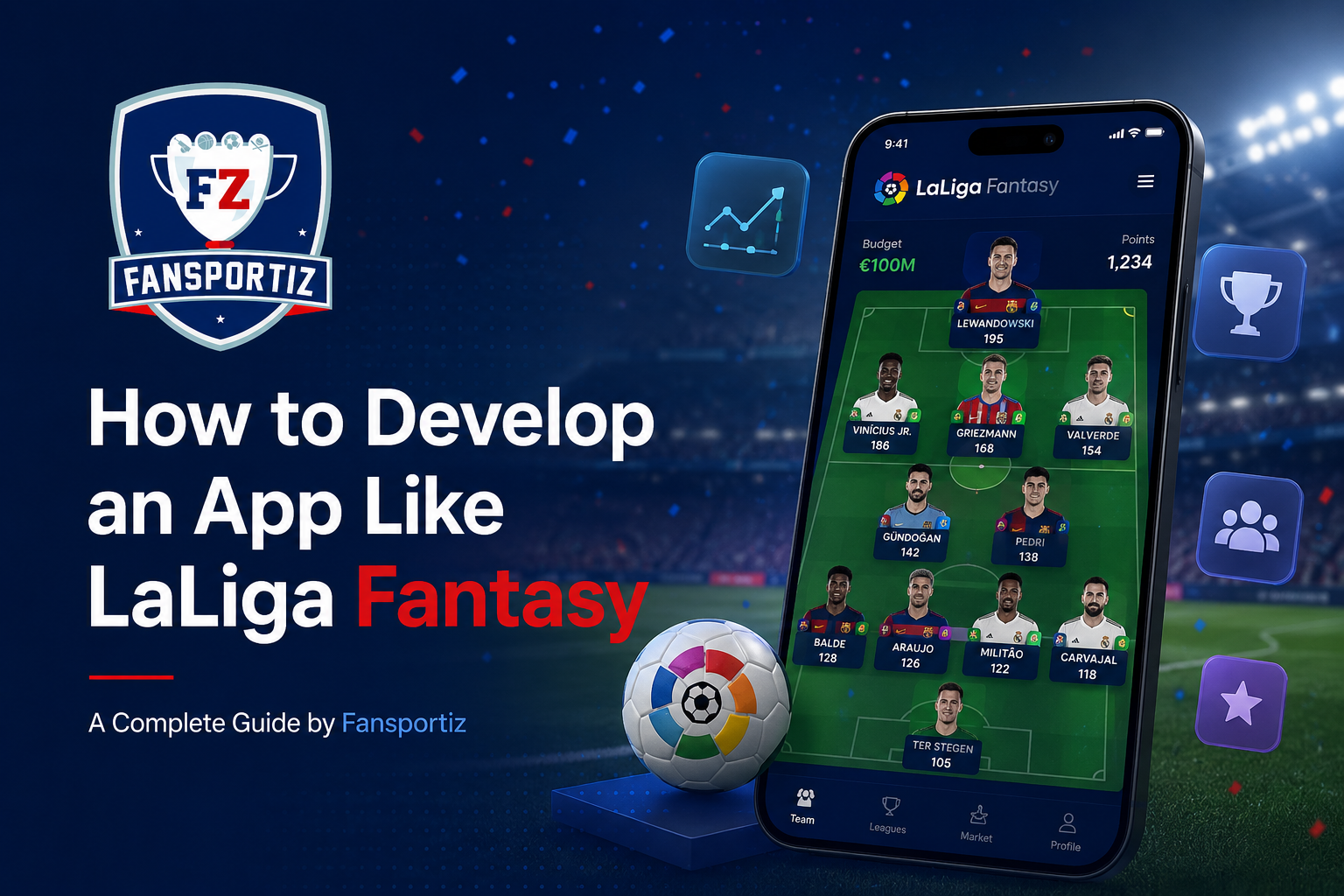
The fantasy sports market is booming, with millions of enthusiasts actively engaging with platforms that bring them closer to their favorite games. LaLiga Fantasy stands out as a prime example, captivating users with its immersive experience. If you’re looking to tap into this lucrative sector, you’ve likely considered how to develop an app like LaLiga Fantasy.
Building such a sophisticated platform presents unique challenges, from integrating real-time data to ensuring a seamless user experience. This comprehensive guide will walk you through every essential step. You will learn how to transform your vision into a high-performing, engaging fantasy football application.
We’ll cover everything from initial market research and feature definition to technical architecture, development, and deployment. While the journey requires significant effort and strategic planning, a structured approach makes it entirely achievable. Prepare to dive deep into the world of fantasy sports app development.
Step 1: Conduct Thorough Market Research and Strategic Planning
Before you develop an app like LaLiga Fantasy, you must understand the landscape. This initial phase is critical for laying a solid foundation for your project. You need to identify your target audience, analyze competitors, and pinpoint market trends.
What to do
Begin by researching existing fantasy soccer platforms. Look at their strengths, weaknesses, and what makes them popular. Analyze user reviews to understand pain points and unmet needs.
Why it matters
This research helps you identify a unique selling proposition (USP) for your app. It ensures you build a product that genuinely resonates with users and stands out from the competition. Without it, you risk creating an app that lacks differentiation.
How to do it
Study successful apps like LaLiga Fantasy to understand their core mechanics, monetization strategies, and user engagement tactics. Look for gaps in the market or areas where you can offer a superior experience. Consider conducting surveys or focus groups with potential users to gather direct insights into their preferences for a comprehensive guide to building a Fantasy sports app.
Common mistakes
A common pitfall is to skip this step or make assumptions about user needs. Another mistake is trying to replicate every feature of a successful app without understanding its strategic purpose. This can lead to feature bloat and a diluted user experience.
Pro tip
Focus on a specific niche or a unique game mode initially. This can help you gain traction and build a loyal user base before expanding your offerings. For example, you might target a particular regional league or introduce an innovative scoring system.
Step 2: Define Core Features and Functionalities
Once your market research is complete, you need to clearly outline what your app will do. This step involves defining all the essential and advanced features that will make your fantasy football app engaging and functional.
What to do
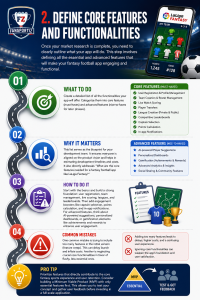
Create a detailed list of all the functionalities your app will offer. Categorize them into core features (must-haves) and advanced features (nice-to-haves for later phases).
Why it matters
This list serves as the blueprint for your development team. It ensures everyone is aligned on the product vision and helps in estimating development timelines and costs. It also directly addresses “What are the core features needed for a fantasy football app like LaLiga Fantasy?”
How to do it
Start with the basics: user registration and profile management, team creation and roster management, and live match scoring. Include player transfers, league creation (private and public), and competitive leaderboards. Consider features like captain selection, points calculation, and in-app notifications.For advanced features, think about AI-powered player suggestions, personalized dashboards, or gamification elements like achievements and rewards. These can significantly enhance user engagement.
Common mistakes
One common mistake is trying to include too many features in the initial version (feature creep). This can delay launch and inflate costs. Another is neglecting crucial core functionalities in favor of flashy, less essential ones.
Pro tip
Prioritize features that directly contribute to the core fantasy sports experience and user retention. Consider building a Minimum Viable Product (MVP) with only essential features first. This allows you to test your concept and gather user feedback before investing in a full-scale application.
Step 3: Design an Intuitive User Interface (UI) and User Experience (UX)
An exceptional UI/UX is paramount for any successful mobile application, especially for a fantasy sports platform. Your app needs to be visually appealing, easy to navigate, and highly engaging to keep users coming back.
What to do
Develop wireframes, mockups, and interactive prototypes that visualize your app’s layout and user flow. Focus on creating a seamless and enjoyable experience.
Why it matters
A well-designed UI/UX directly impacts user satisfaction, retention, and overall app success. It answers the critical question: “How to create an engaging user experience for a fantasy football manager game?” An intuitive design reduces friction and makes the app enjoyable to use.
How to do it
Prioritize clear, concise navigation that allows users to easily find what they need, from team management to live scores. Use a visually appealing color scheme and typography that aligns with your brand. Ensure interactive elements are responsive and provide immediate feedback.
Focus on “UI/UX design best practices for engaging fantasy football apps.” This includes designing for mobile-first, ensuring accessibility, and creating personalized dashboards. These dashboards can display relevant information like team performance, upcoming matches, and league standings.
Common mistakes
Neglecting user feedback during the design phase is a significant error. Another mistake is prioritizing aesthetics over usability, leading to a beautiful but difficult-to-use app. Inconsistent design elements across different screens can also confuse users.
Pro tip
Conduct extensive user testing with your prototypes. Observe how real users interact with your design and gather their feedback. This iterative process allows you to refine the UI/UX before significant development begins, saving time and resources in the long run.
Step 4: Choose the Right Technology Stack
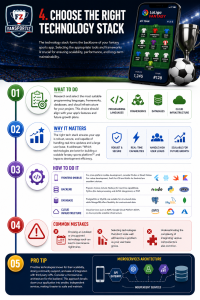
The technology stack forms the backbone of your fantasy sports app. Selecting the appropriate tools and frameworks is crucial for ensuring scalability, performance, and long-term maintainability. This decision directly impacts your ability to develop an app like LaLiga Fantasy that can handle high user loads and real-time data.
What to do
Research and select the most suitable programming languages, frameworks, databases, and cloud infrastructure for your project. This choice should align with your app’s features and future growth plans.
Why it matters
The right tech stack ensures your app is robust, secure, and capable of handling real-time updates and a large user base. It addresses “Which technologies are best for building a scalable fantasy sports platform?” and impacts development efficiency.
How to do it
For cross-platform mobile development, consider frameworks like Flutter or React Native. These allow you to write code once and deploy on both iOS and Android, saving time and cost. For native development, Swift for iOS and Kotlin for Android are excellent choices.
For the backend, popular choices include Node.js (for real-time capabilities), Python (for data processing and AI/ML integration), or PHP. Databases like PostgreSQL or MySQL are suitable for structured data, while MongoDB offers flexibility for unstructured data. Cloud services such as AWS, Google Cloud Platform (GCP), or Azure provide scalable infrastructure.
Common mistakes
Choosing an outdated or unsupported technology stack can lead to maintenance nightmares. Another mistake is selecting technologies that don’t scale well, which will become a problem as your user base grows. Underestimating the complexity of integrating various components is also common.
Pro tip
Prioritize technologies known for their scalability, strong community support, and ease of integration with third-party APIs. Consider a microservices architecture for the backend. This approach breaks down your application into smaller, independent services, making it easier to scale and maintain.
Step 5: Develop the Application (Frontend and Backend)
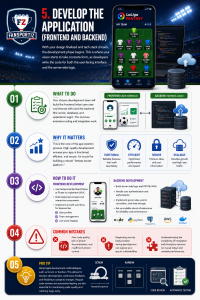
With your design finalized and tech stack chosen, the development phase begins. This is where your vision starts to take concrete form, as developers write the code for both the user-facing interface and the server-side logic.
What to do
Your chosen development team will build the frontend (what users see and interact with) and the backend (the server, database, and application logic). This involves extensive coding and integration work.
Why it matters
This is the core of the app creation process. High-quality development ensures your app is functional, efficient, and secure. It’s crucial for building a robust “fantasy soccer platform.”
How to do it
Frontend developers will use the chosen frameworks (e.g., React Native, Flutter) to implement the UI/UX designs. They will focus on creating responsive screens, interactive components, and smooth user flows. This includes user profiles, team management interfaces, and live score displays.
Backend developers will build the server-side logic, APIs, and database interactions. They will handle user authentication, game rules, points calculation, and data storage. This also involves setting up the “scalable cloud infrastructure” to support your app’s operations.
Common mistakes
Poor code quality, lack of proper documentation, and insufficient version control can lead to significant issues down the line. Neglecting security best practices during development can expose your app and users to vulnerabilities.
Pro tip
Adopt agile development methodologies, such as Scrum or Kanban. This allows for iterative development, continuous feedback, and flexibility to adapt to changes. Regular code reviews and automated testing are also essential for maintaining code quality and catching bugs early.
Step 6: Integrate Real-time Sports Data and Payment Gateways
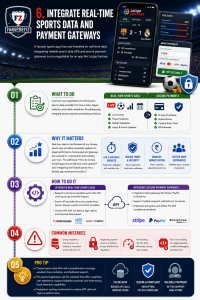
A fantasy sports app lives and breathes on real-time data. Integrating reliable sports data APIs and secure payment gateways is non-negotiable for an app like LaLiga Fantasy. This step ensures your users receive up-to-the-minute information and can engage in financial transactions safely.
What to do
Connect your application to third-party sports data providers for live scores, player statistics, and match schedules. Simultaneously, integrate secure payment processing solutions.
Why it matters
Real-time data is the lifeblood of any fantasy sports app, providing immediate updates on player performance. Secure payment gateways are essential for monetization and building user trust. This addresses “How do fantasy football apps ensure real-time score updates?” and “integrating live football scores into a fantasy app development project.”
How to do it
Research and license reputable sports data APIs that cover LaLiga and other relevant football leagues. These APIs will feed your app with live scores, player statistics, injury updates, and match events. Ensure the API offers low latency and high reliability.
For payment gateways, integrate trusted providers like Stripe, PayPal, or Braintree. These platforms offer secure transaction processing for in-app purchases, premium subscriptions, or contest entry fees. Implement robust encryption and compliance with PCI DSS standards.
Common mistakes
Using unreliable or free data sources can lead to inaccurate scores and a poor user experience. Neglecting payment security or failing to comply with financial regulations can result in severe legal and reputational damage. Not handling API rate limits effectively can cause data outages.
Pro tip
Choose sports data APIs that provide comprehensive coverage, excellent documentation, and dedicated support. For payment gateways, opt for solutions that offer a seamless user experience, support multiple currencies, and have strong fraud detection capabilities. Implement caching mechanisms to reduce API calls and improve performance.
Step 7: Implement Robust Quality Assurance and Testing
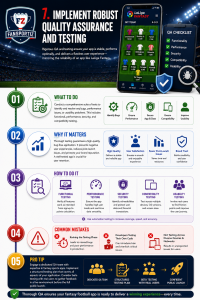
Before your app goes live, rigorous quality assurance (QA) and testing are absolutely essential. This phase ensures your app is stable, performs optimally, and delivers a flawless user experience, mirroring the reliability of an app like LaLiga Fantasy.
What to do
Conduct a comprehensive suite of tests to identify and resolve any bugs, performance issues, or usability problems. This includes functional, performance, security, and compatibility testing.
Why it matters
Thorough testing guarantees a high-quality, bug-free application. It prevents negative user experiences, reduces post-launch issues, and protects your brand reputation. A well-tested app is crucial for user retention.
How to do it
Perform functional testing to ensure all features work as intended, from user registration to points calculation. Conduct performance testing to verify the app can handle high user loads and real-time data updates without slowing down. Security testing is vital to protect user data and prevent vulnerabilities.
Compatibility testing ensures your app works seamlessly across various devices, operating systems, and screen sizes. Usability testing, often involving real users, helps identify any friction points in the user journey. Implement automated testing where possible to streamline the process.
Common mistakes
Rushing the testing phase or relying solely on developers to test their own code are common errors. Another mistake is not testing on a diverse range of devices and network conditions, leading to unexpected issues for users.
Pro tip
Engage a dedicated QA team with expertise in fantasy sports apps. Implement a structured testing plan that covers all aspects of your application. Consider beta testing with a small group of real users to gather feedback in a live environment before the full public launch.
Step 8: Ensure Legal and Regulatory Compliance
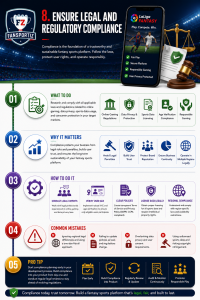
Operating a fantasy sports app involves navigating a complex web of legal and regulatory requirements. Ensuring compliance is a critical step to avoid legal issues and build trust with your user base. This is especially important when you make an app like LaLiga Fantasy, which operates in a regulated environment.
What to do
Research and adhere to all relevant laws concerning online gaming, data privacy, and sports data licensing in your target regions. This includes understanding age verification and responsible gaming policies.
Why it matters
Non-compliance can lead to severe penalties, legal battles, and damage to your brand reputation. Adhering to regulations builds user trust and ensures the long-term viability of your platform. It addresses “legal and compliance requirements for fantasy sports platforms.”
How to do it
Consult with legal experts specializing in online gaming and data privacy. Implement robust age verification processes to ensure only eligible users participate. Develop clear terms of service and a privacy policy that outline data handling practices in compliance with regulations like GDPR or CCPA.
Secure proper licensing for any sports data you use, as unauthorized use can lead to copyright infringement. Be aware of regional differences in fantasy sports legality and tailor your app’s availability accordingly.
Common mistakes
Ignoring regional legal differences or assuming a “one-size-fits-all” approach to compliance is a major risk. Failing to update policies as regulations change can also lead to issues. Overlooking data privacy requirements is another critical error.
Pro tip
Start legal consultations early in the development process. This allows you to design your app with compliance in mind, rather than trying to retrofit it later. Regularly review and update your legal policies to stay current with evolving regulations.
Step 9: Deploy and Launch Your App
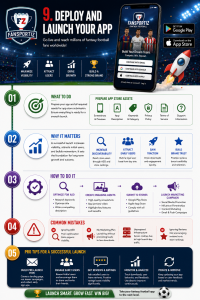
The moment of truth arrives when your app is ready for the public. This step involves preparing your application for submission to app stores and executing a strategic launch plan to maximize visibility and user acquisition.
What to do
Prepare all necessary assets for app store submission, including screenshots, descriptions, and privacy policies. Submit your app to the Google Play Store and Apple App Store, then execute your marketing strategy.
Why it matters
A well-executed launch is crucial for attracting initial users and gaining traction in a competitive market. Effective App Store Optimization (ASO) and marketing efforts determine your app’s discoverability.
How to do it
Optimize your app’s title, keywords, and description for App Store Optimization (ASO). This helps users find your app when searching in the stores. Create compelling screenshots and a preview video that highlight your app’s best features.
Submit your app to the Apple App Store (for iOS) and Google Play Store (for Android), ensuring all guidelines are met. Once approved, launch your marketing campaign. This might include social media promotion, influencer partnerships, and content marketing.
Common mistakes
Neglecting ASO can severely limit your app’s organic discoverability. Launching without a clear marketing strategy or failing to promote your app across various channels are also common pitfalls. Not preparing for potential server load spikes on launch day can lead to performance issues.
Pro tip
Plan a pre-launch marketing campaign to build anticipation and gather early sign-ups. Encourage early users to leave reviews, as positive ratings significantly boost app store visibility. Monitor app store performance and user feedback closely post-launch to identify areas for improvement.
Step 10: Implement Monetization Strategies and Post-Launch Maintenance
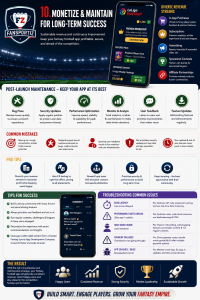
Launching your app is just the beginning. To ensure its long-term success and profitability, you need effective monetization strategies and a plan for ongoing maintenance and updates. This is how you truly make an app like LaLiga Fantasy a sustainable business.
What to do
Integrate various monetization models into your app and establish a robust system for ongoing maintenance, bug fixes, and feature updates.
Why it matters
Monetization ensures your app generates revenue to cover operational costs and fund future development. Regular maintenance keeps your app secure, functional, and engaging, preventing user churn.
How to do it
Explore diverse monetization strategies. In-app purchases (e.g., for virtual currency, premium features, or special player packs) are highly effective. Subscription models can offer premium access to advanced analytics, ad-free experiences, or exclusive leagues. Advertising (banner ads, interstitial ads, rewarded videos) can also generate revenue. Consider sponsored contests or affiliate partnerships.
For maintenance, establish a schedule for regular bug fixes, security patches, and performance optimizations. Continuously monitor user feedback and analytics to identify areas for improvement. Plan for iterative feature updates to keep the app fresh and competitive.
Common mistakes
Relying on a single monetization model can limit revenue potential. Neglecting post-launch maintenance leads to outdated features, security vulnerabilities, and a poor user experience. Failing to respond to user feedback can alienate your community.
Pro tip
Diversify your monetization streams to maximize revenue while maintaining a positive user experience. Implement A/B testing for different monetization approaches to see what resonates best with your audience. Prioritize security updates and performance enhancements to maintain user trust and satisfaction.
Tips for Success
Achieving success with your fantasy sports app requires more than just development; it demands continuous effort and strategic thinking. Focus on building a vibrant community around your platform. Encourage interaction through in-app chats, forums, and social sharing features.
Always prioritize user feedback. Regularly collect suggestions and bug reports, then use this data to guide your updates and new features. This iterative approach ensures your app evolves to meet user needs. Consider leveraging a white-label solution from a reputable Fantasy Sports App Development Company to accelerate your launch. This can save significant time and resources, allowing you to focus on marketing and user engagement.
Troubleshooting Common Issues
Even with meticulous planning, you might encounter common challenges. Data latency, where live scores or player stats are delayed, can frustrate users. To fix this, optimize your API calls, implement robust caching mechanisms, and consider using real-time data streaming protocols.
Performance bottlenecks, such as slow loading times or app crashes during peak usage, often stem from inefficient code or inadequate server infrastructure. Address this by optimizing your backend code, scaling your cloud resources, and implementing load balancing. If you notice high user churn, it might indicate a lack of engagement. Enhance your app with personalized content, new game modes, and regular contests to keep users invested.
