
Published on - Jun 30th, 2026
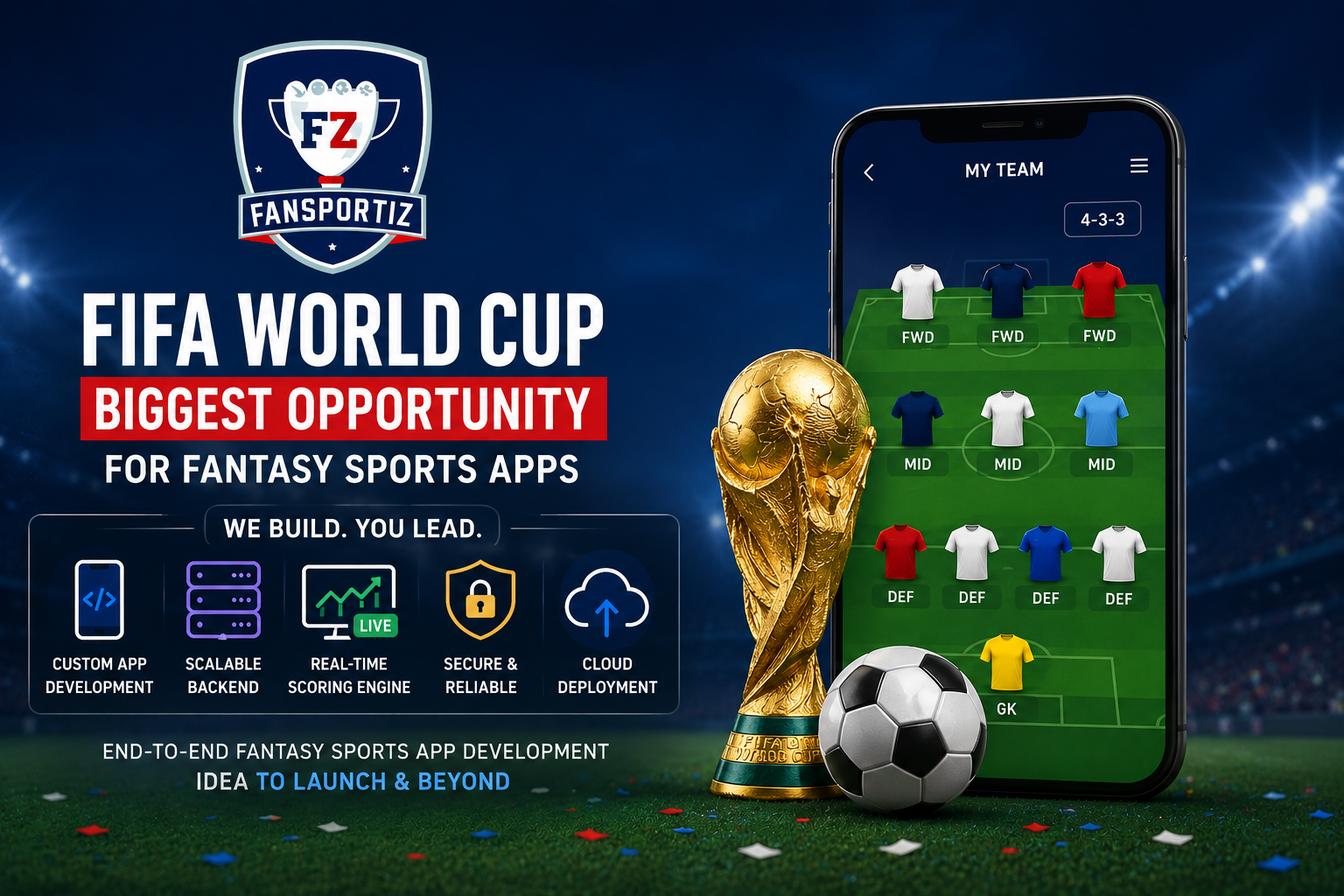
The FIFA World Cup 2026 is set to be the biggest football tournament in history. Hosted across the United States, Canada, and Mexico, the tournament will feature 48 national teams, more matches than ever before, and billions of viewers worldwide. Alongside the excitement on the pitch, fantasy football platforms are expected to witness record-breaking user registrations, engagement, and revenue opportunities.
Today’s fantasy football users, however, expect much more than basic team selection and leaderboards. They want real-time insights, AI-powered player recommendations, personalized notifications, predictive analytics, instant customer support, and immersive gameplay.
This growing demand is making Artificial Intelligence (AI) one of the most influential technologies in fantasy sports app development.
Interestingly, FIFA itself is embracing AI to improve officiating, broadcasting, fan engagement, and tournament operations. For businesses planning to launch a fantasy football app, this presents an opportunity to adopt similar AI capabilities and deliver a next-generation user experience.
In this guide, we’ll explore:
- •How FIFA World Cup 2026 is utilizing AI
- •Why AI is reshaping fantasy football apps
- •AI features every fantasy sports platform should include
- •Business benefits of AI integration
- •Technology stack recommendations
- •Key development challenges
- •Why partnering with an experienced fantasy sports development company matters
Whether you’re a startup founder, gaming entrepreneur, sports organization, or enterprise, this guide will help you understand how AI can give your fantasy football platform a competitive edge.
Why Is AI Becoming Essential for Fantasy Football Apps?
Fantasy football has evolved significantly over the past decade. Initially, platforms relied on manual player statistics, basic scoring systems, and static recommendations. Today, users expect apps to deliver intelligent insights tailored to their playing style.
AI enables fantasy football platforms to analyze millions of data points in real time, helping users make smarter decisions while improving overall engagement.
Some of the biggest reasons businesses are integrating AI include:
- •Personalized user experiences
- •Intelligent player recommendations
- •Predictive analytics
- •Automated customer support
- •Fraud detection
- •Dynamic content generation
- •Better contest recommendations
- •Improved user retention
- •Responsible gaming initiatives
For businesses, AI is not just a feature—it has become a competitive differentiator.
How Is FIFA World Cup 2026 Using Artificial Intelligence?
FIFA has increasingly adopted AI-driven technologies to improve the quality of football matches, fan experiences, and tournament management. While some innovations debuted in previous tournaments, FIFA World Cup 2026 is expected to build on these advancements with even deeper AI integration.
Let’s explore how FIFA is leveraging AI and what fantasy sports businesses can learn from it.
1. AI-Powered Semi-Automated Offside Technology
Offside decisions have historically been one of football’s most debated aspects.
Using AI, computer vision, and multiple tracking cameras, FIFA’s Semi-Automated Offside Technology (SAOT) tracks player positions and ball movement in real time, enabling officials to make faster and more accurate offside decisions.
Business takeaway for fantasy apps:
- •Real-time player tracking
- •Faster fantasy point updates
- •Improved match accuracy
- •Enhanced user trust
2. Connected Ball Technology
Modern match balls are equipped with sensors that transmit positional data multiple times per second.
This AI-powered data helps officials detect ball movement instantly and improves decision-making.
Fantasy football platforms can leverage similar live data feeds to:
- •Update fantasy points instantly
- •Improve live match dashboards
- •Deliver richer player statistics
3. AI-Based Player Performance Analytics
AI analyzes player movements, positioning, stamina, passing accuracy, pressing intensity, and tactical contributions.
Rather than relying solely on goals and assists, AI evaluates holistic player performance.
Fantasy platforms can use similar analytics to offer:
- •Player performance scores
- •AI-powered player comparisons
- •Better transfer recommendations
- •Smarter captain suggestions
4. Personalized Fan Experiences
FIFA continues investing in AI-powered personalization across its digital platforms.
Fans receive customized content based on:
- •Favorite teams
- •Preferred players
- •Viewing history
- •Match interests
- •Language preferences
Fantasy football apps can replicate this by personalizing:
- •Contest recommendations
- •Push notifications
- •Fantasy tips
- •Match reminders
- •Exclusive promotions
5. AI-Powered Broadcast Insights
Broadcasters increasingly use AI to generate:
- •Live statistics
- •Tactical visualizations
- •Heat maps
- •Performance graphs
- •Match predictions
Fantasy football users enjoy similar visual insights that help them make informed lineup decisions.
6. AI for Tournament Operations
AI also supports large-scale tournament management through:
- •Crowd flow analysis
- •Stadium security monitoring
- •Predictive maintenance
- •Logistics optimization
- •Scheduling assistance
While these capabilities may not directly apply to fantasy platforms, they demonstrate how AI can improve operational efficiency at scale.
FIFA’s AI Innovations and Their Impact on Fantasy Sports
| FIFA AI Innovation | How FIFA Uses It | Opportunity for Fantasy Football Apps |
|---|---|---|
| Semi-Automated Offside Technology | Faster offside decisions | Real-time fantasy scoring |
| Connected Ball Technology | Live ball tracking | Instant player statistics |
| Computer Vision | Player movement analysis | Advanced player insights |
| AI Broadcast Analytics | Tactical visualizations | Enhanced fantasy dashboards |
| Personalized Fan Experiences | Customized content | Personalized contests and recommendations |
| Predictive Analytics | Match insights | Captain and transfer suggestions |
Why Should Fantasy Football Apps Follow FIFA’s AI Strategy?
Users no longer compare your app only with other fantasy platforms—they compare it with every modern digital experience they use.
If FIFA is delivering AI-powered experiences to billions of fans, fantasy football platforms should adopt similar technologies to remain competitive.
Benefits include:
- •Better user engagement
- •Improved decision-making
- •Higher contest participation
- •Increased user retention
- •Greater monetization opportunities
- •Stronger brand loyalty
What AI Features Should Every Fantasy Football App Include?
1. AI-Powered Player Recommendations
AI analyzes:
- •Current form
- •Historical performance
- •Opponent strength
- •Playing time
- •Injury reports
- •Team tactics
The system recommends players with the highest probability of earning fantasy points.
2. Predictive Analytics
Predictive models estimate:
- •Expected Goals (xG)
- •Expected Assists (xA)
- •Clean sheet probability
- •Save probability
- •Goal involvement
- •Injury risk
Users can make data-driven decisions rather than relying on intuition.
3. Smart Captain Suggestions
Choosing the captain often determines contest outcomes.
AI evaluates hundreds of variables to recommend captain and vice-captain selections with the highest projected fantasy scores.
4. Personalized Notifications
Instead of generic alerts, AI sends contextual notifications, such as:
- •Match reminders
- •Team deadline alerts
- •Injury updates
- •Player suspension news
- •Recommended transfers
- •Contest invitations
Personalized communication significantly improves user engagement.
5. AI Chatbots
AI-powered chatbots provide instant assistance for:
- •Contest rules
- •Wallet issues
- •Withdrawals
- •Team creation
- •Fantasy scoring
- •Referral programs
This reduces operational costs while enhancing customer satisfaction.
6. Smart Contest Recommendations
Every user has different preferences.
AI recommends contests based on:
- •Budget
- •Previous participation
- •Skill level
- •Preferred contest size
- •Risk profile
This improves contest participation and revenue.
7. Fraud Detection
Fantasy sports platforms face risks such as:
- •Multiple accounts
- •Bonus abuse
- •Automated bots
- •Suspicious transactions
AI continuously monitors behavior and flags unusual activity before it affects the platform.
8. Responsible Gaming
AI can identify excessive gaming patterns and encourage responsible participation by introducing:
- •Spending reminders
- •Deposit limits
- •Cool-off periods
- •Responsible gaming notifications
Can AI Predict Player Performance in Fantasy Football?
Yes—within reasonable limits.
AI cannot predict the future with certainty, but it can estimate likely outcomes using historical and real-time data.
Machine learning models evaluate:
- •Recent form
- •Opposition quality
- •Venue
- •Playing minutes
- •Tactical systems
- •Team chemistry
- •Injury history
- •Weather conditions
The result is a probability-based prediction that helps fantasy managers make better decisions.
How Does AI Improve User Engagement During the FIFA World Cup?
During a month-long tournament, maintaining user engagement is crucial.
AI keeps users active through:
- •Personalized dashboards
- •Dynamic leaderboards
- •Smart reminders
- •Fantasy tips
- •AI-generated match previews
- •Interactive player comparisons
- •Live analytics
AI Features vs Business Benefits
| AI Feature | User Benefit | Business Benefit |
|---|---|---|
| Recommendation Engine | Better team selection | Higher engagement |
| Predictive Analytics | Smarter decisions | Increased contest participation |
| Personalized Notifications | Timely updates | Improved retention |
| AI Chatbot | Instant support | Lower support costs |
| Fraud Detection | Fair gameplay | Higher platform trust |
| Dynamic Content | Fresh insights | Longer session duration |
Which AI Technologies Power Modern Fantasy Sports Apps?
Several AI technologies work together to create intelligent fantasy football experiences.
| Technology | Primary Use Case |
|---|---|
| Machine Learning | Player performance prediction |
| Natural Language Processing (NLP) | AI chatbots and voice assistants |
| Computer Vision | Match analysis and player tracking |
| Deep Learning | Performance forecasting |
| Recommendation Engines | Personalized player and contest suggestions |
| Predictive Analytics | Fantasy scoring projections |
| Generative AI | Match previews, fantasy tips, and content generation |
What Technology Stack Is Best for an AI Fantasy Football App?
Choosing the right technology stack is essential for handling millions of users during tournaments like FIFA World Cup 2026.
| Layer | Recommended Technologies |
|---|---|
| Frontend | Flutter, React Native |
| Backend | Node.js, Python, Java |
| Database | PostgreSQL, MongoDB, Redis |
| AI Frameworks | TensorFlow, PyTorch, Scikit-learn |
| Generative AI | OpenAI APIs, Llama-based models |
| Cloud | AWS, Google Cloud, Microsoft Azure |
| Real-Time Infrastructure | Kafka, Redis Streams, WebSockets |
| Payments | Stripe, PayPal, Razorpay (region-specific) |
What Are the Biggest Benefits of AI for Fantasy Sports Businesses?
AI doesn’t just enhance the user experience—it also drives measurable business outcomes.
Business Benefits at a Glance
- •Higher user engagement
- •Increased user retention
- •Better customer satisfaction
- •Improved contest participation
- •Reduced customer support costs
- •Faster fraud detection
- •Enhanced operational efficiency
- •Increased in-app purchases
- •Smarter marketing campaigns
- •Greater long-term profitability
What Challenges Should You Consider When Building an AI Fantasy Football App?
While AI offers tremendous opportunities, implementing it successfully requires careful planning.
Some common challenges include:
- •Integrating reliable real-time sports data feeds
- •Ensuring low-latency updates during live matches
- •Managing peak traffic during high-profile games
- •Protecting user data and privacy
- •Training accurate AI models
- •Balancing infrastructure costs
- •Meeting regional gaming regulations
- •Scaling cloud infrastructure efficiently
Partnering with an experienced fantasy sports app development company can help mitigate these challenges and accelerate your go-to-market strategy.
What Does the Future Hold for AI in Fantasy Football?
The next generation of fantasy sports platforms will become even more intelligent and immersive.
Emerging trends include:
- •AI-powered fantasy coaches
- •Hyper-personalized user journeys
- •Voice-enabled fantasy assistants
- •Augmented reality (AR) match experiences
- •Predictive injury analysis
- •AI-generated tactical simulations
- •Emotion-aware fan engagement
- •Automated tournament management
- •Blockchain-integrated fantasy ecosystems
- •Generative AI for instant match summaries and social content
Businesses that invest in these innovations today will be better positioned to lead the fantasy sports market tomorrow.
Why Is Now the Right Time to Build an AI-Powered Fantasy Football App?
The FIFA World Cup 2026 presents a once-in-four-years opportunity to capture a global audience of passionate football fans. With AI becoming central to both FIFA’s operations and user expectations, businesses have a unique chance to build fantasy football platforms that deliver smarter insights, personalized experiences, and engaging gameplay.
By integrating technologies such as predictive analytics, recommendation engines, AI chatbots, fraud detection, and real-time performance analysis, your platform can stand out in an increasingly competitive fantasy sports market. More importantly, AI enables you to create long-term user value that extends well beyond the tournament itself.
Ready to Build the Next AI-Powered Fantasy Football App?
Building a successful fantasy football platform requires more than great ideas—it demands deep expertise in fantasy sports architecture, AI integration, scalable cloud infrastructure, real-time data processing, secure payment systems, and user-centric design.
At Fansportiz, we help businesses transform those ideas into market-ready fantasy sports platforms. With 15+ years of experience in fantasy sports app development, our team of 60+ trained and skilled engineers has successfully launched 130+ fantasy sports applications across football, cricket, basketball, baseball, kabaddi, and other sports.
From product strategy and UI/UX design to AI-powered features, backend development, third-party API integrations, compliance, testing, deployment, and post-launch support, we provide end-to-end fantasy sports app development services tailored to your business objectives.
Whether you’re building a fantasy football app for the FIFA World Cup 2026, a domestic football league, or a year-round fantasy sports platform, Fansportiz has the technical expertise, industry knowledge, and proven track record to help you launch a secure, scalable, and engaging product that stands out in the competitive fantasy sports market. Launch your own fantasy sports app in just 60 Days with our expert product development solutions.
Frequently Asked Questions
Quick answers to the most common questions about building and launching a fantasy football app around the FIFA World Cup 2026.
QWhy is the FIFA World Cup the best time to launch a fantasy sports app?
The FIFA World Cup attracts billions of viewers and millions of football fans worldwide, making it one of the biggest opportunities for fantasy sports businesses. Launching a fantasy football app during this period can help increase user acquisition, engagement, and revenue potential.
QWhat features should a fantasy football app include?
A successful fantasy football app should include user registration, fantasy team creation, live match updates, real-time scoring, leaderboards, push notifications, secure payment integration, private leagues, referral programs, and an intuitive admin panel.
QHow much does it cost to develop a fantasy football app?
The cost of developing a fantasy football app depends on its features, technology stack, supported platforms, and customization requirements. A basic MVP costs significantly less than a feature-rich platform with AI-powered recommendations, live scoring, and advanced analytics.
QHow long does it take to build a fantasy football app?
Development timelines typically range from 3 to 5 months for a minimum viable product (MVP) and 6 to 9 months for a fully customized fantasy football platform with advanced features and integrations.
QHow do fantasy football apps make money?
Fantasy football apps generate revenue through entry fees (where legally permitted), premium subscriptions, in-app purchases, advertising, sponsorships, affiliate partnerships, and branded tournaments.
QWhy choose Fansportiz for fantasy football app development?
Fansportiz provides end-to-end fantasy sports app development services, including custom UI/UX design, scalable backend development, real-time scoring integration, API integration, cloud deployment, security, testing, and post-launch support to help businesses launch high-performing fantasy football platforms.
